



AMD used CES 2026 to introduce a wide range of new processors for laptops and desktops, focusing on AI-powered computing, gaming performance, and systems designed for both consumers and businesses. The company announced new Ryzen AI 400 Series, Ryzen AI PRO 400 Series, and Ryzen AI Max+ processors, along with a new desktop gaming chip, the Ryzen 7 9850X3D.
AMD says these announcements expand its client computing lineup and bring AI features, better graphics, and higher performance to more types of devices, from thin laptops to compact desktops and high-end gaming PCs.

Why It Matters: PC brands are now treating AI as a core part of the computing experience, not just an extra feature. AMD’s announcements show how chipmakers are building AI acceleration directly into processors for everyday laptops, work machines, and gaming systems.
For Copilot+ PCs, AMD introduced the Ryzen AI 400 Series and Ryzen AI PRO 400 Series. These chips are based on the Zen 5 architecture and use second-generation XDNA 2 NPUs, delivering up to 60 TOPS of AI performance. AMD says all chips in this family exceed the requirements for Copilot+ PCs.
The new processors offer up to 12 CPU cores, integrated Radeon 800M graphics, and faster memory support. AMD claims these chips are designed to deliver strong performance, long battery life, and on-device AI features across many laptop designs.
For business users, the Ryzen AI PRO 400 Series adds enterprise-focused features such as improved security, manageability, and long-term platform stability. AMD says this allows companies to roll out AI-capable PCs while keeping the same tools IT teams already rely on.
AMD also confirmed that laptops using Ryzen AI 400 and Ryzen AI PRO 400 processors will start arriving in early 2026 from major PC makers, with desktop versions following later in the year.
For higher-end thin laptops and compact desktops, AMD expanded its Ryzen AI Max+ lineup with the new Ryzen AI Max+ 392 and 388. These chips combine Zen 5 CPU cores, Radeon 8060S graphics, and XDNA-based NPUs in a single package. The goal is to offer near desktop-level performance for creative work, AI tasks, and gaming in slimmer devices. Systems using these chips are expected to launch starting in the first quarter of 2026.
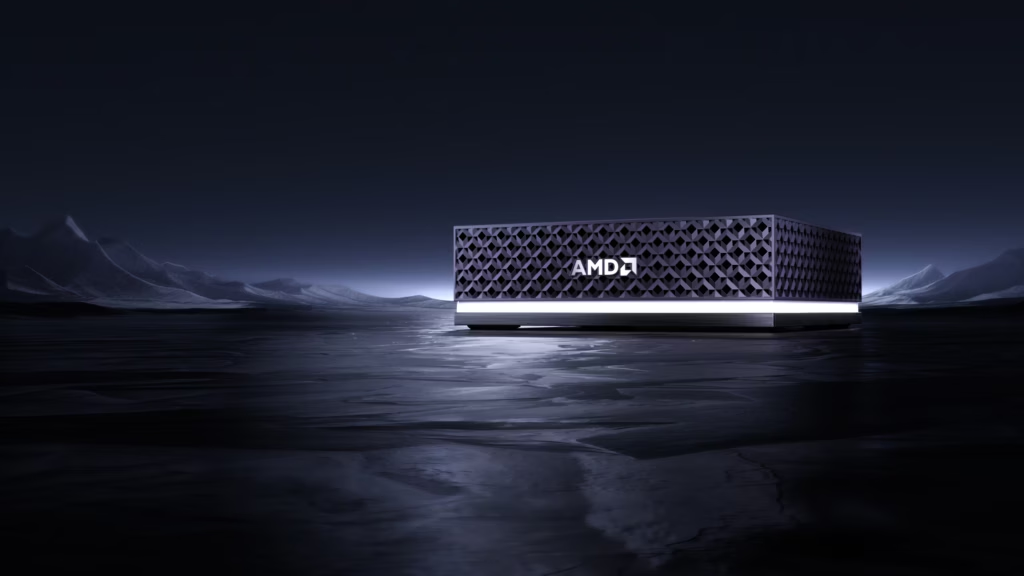
AMD also introduced a new developer-focused mini PC called Ryzen AI Halo. This is a compact system built around Ryzen AI Max+ processors and is designed for AI development. AMD says it can run very large AI models locally and supports both Windows and Linux. The company plans to launch this platform in the second quarter of 2026.
For gamers, AMD announced the Ryzen 7 9850X3D, its new flagship gaming processor. It uses Zen 5 cores and second-generation 3D V-Cache technology. AMD says this chip offers a higher boost clock than the previous generation and delivers a noticeable jump in gaming performance. The processor has eight cores, 16 threads, and a large 104MB cache, and systems using it are expected to arrive in early 2026.
On the software side, AMD also talked about updates to its AI and gaming tools. The company is expanding ROCm support to more Ryzen AI processors and making it easier to install AI tools through its software. It also highlighted the latest version of FSR “Redstone,” which uses machine learning for upscaling and frame generation in games, aiming to improve both image quality and performance.
With these announcements, AMD is clearly pushing to make AI a standard part of everyday PCs while also keeping a strong focus on gaming performance and high-end computing. Do you think AI features will matter more than raw speed when choosing your next PC?
Discover more from WalasTech
Subscribe to get the latest posts sent to your email.
Get the latest from WALASTECH directly on your Google feed.
Add as a preferred source on Google