



As Filipinos observe Holy Week, The Bank of the Philippine Islands (BPI) is reminding the public to stay cautious against online scams. The advisory comes as increased digital activity during the holiday period creates more opportunities for fraud.
The bank shared common scam tactics and safety tips ahead of April, when online transactions such as payments and donations are expected to rise. The initiative aims to help users better protect their accounts and personal information.

Why it Matters: As digital payments become more common, users face higher exposure to scams that can lead to financial loss or data breaches. Awareness and simple safety practices can help reduce these risks, especially during periods when people are more active online.portunities for scams. Cybercriminals often take advantage of urgency and goodwill, making it harder for users to distinguish between legitimate and fraudulent transactions.
Scams today are becoming more sophisticated. These include phishing messages, fake payment links, impersonation attempts, and fraudulent donation drives. Many of these are designed to look like messages from trusted institutions or even people the user knows.
According to Jonathan John B. Paz, Head of Enterprise Fraud Risk and Information Security Management at Bank of the Philippine Islands, scammers often rely on urgency and emotion to push users into acting quickly without verifying requests. He adds that practicing good cyber hygiene and verifying transactions can help protect both funds and personal information.
BPI outlined several common scam types to watch out for: fake text messages or emails asking for card details or One-Time PINs, fraudulent payment links from unverified sellers, impersonation scams involving fake identities, and fake donation drives that copy legitimate causes.
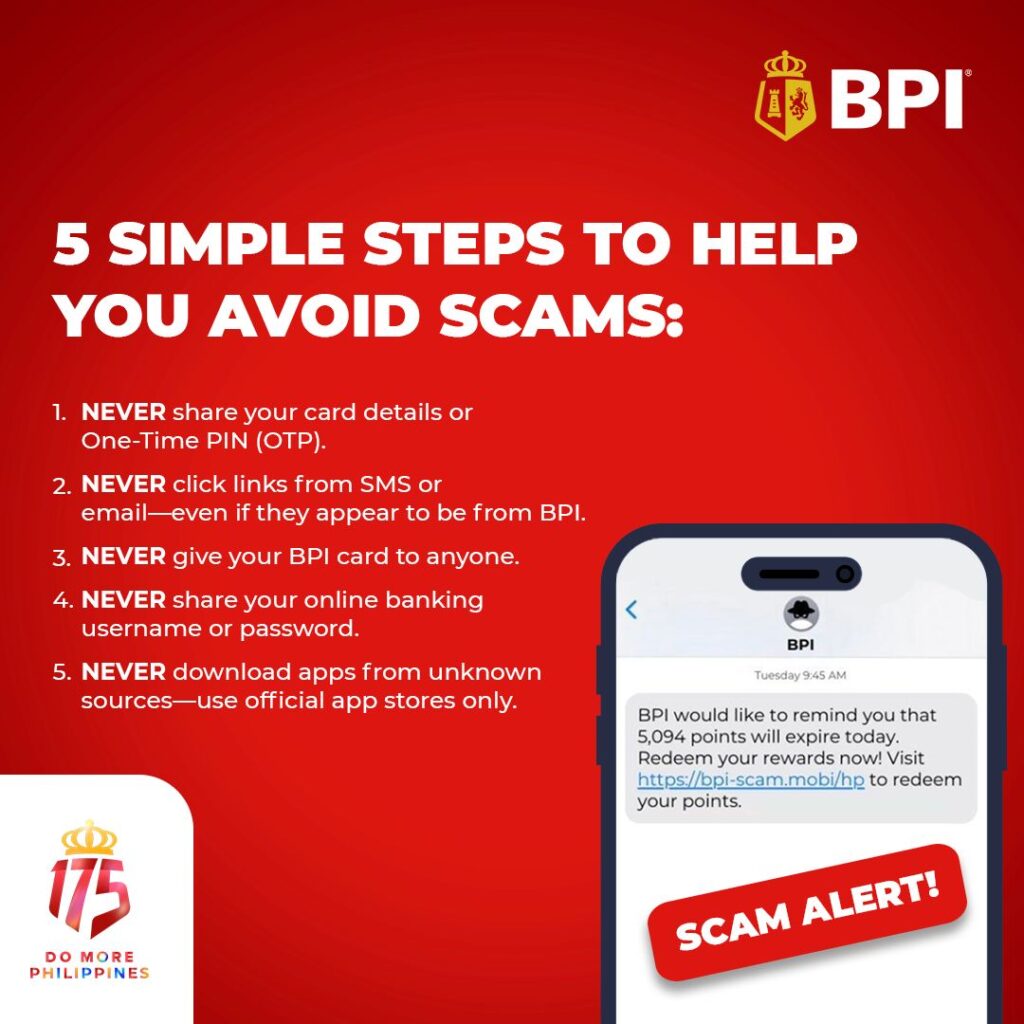
To help users stay safe, BPI shared five basic reminders:
- Never share card details or One-Time PINs
- Avoid clicking links from SMS or email, even if they appear legitimate
- Do not hand over your bank card to anyone
- Keep online banking usernames and passwords private
- Only download apps from official sources like app stores
The bank also encourages users to regularly review account settings and keep contact details updated to improve account security.
As more Filipinos rely on digital financial services, building safer habits is becoming a shared responsibility. Will increased awareness be enough to reduce online scams during peak seasons like Holy Week?
Discover more from WalasTech
Subscribe to get the latest posts sent to your email.
Get the latest from WALASTECH directly on your Google feed.
Add as a preferred source on Google