

More than half of Philippine companies surveyed by Boston Consulting Group (BCG) and Makati Business Club (MBC) aim to reach the highest level of artificial intelligence (AI) maturity by 2029, but none have achieved that status yet. A new study also found that the country’s average AI maturity remains approximately two years behind the global average.
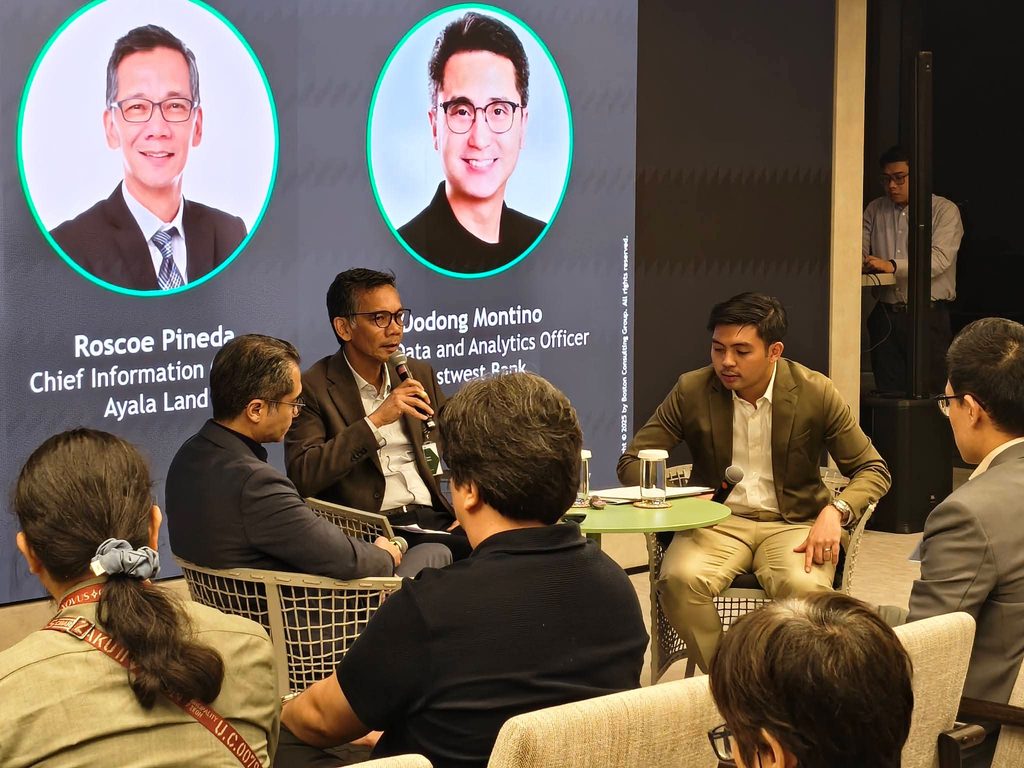
These are among the findings of The Philippine AI Maturity Report, released by BCG in collaboration with MBC on November 11, 2026. The study highlights the gap between companies’ growing AI capabilities and their ability to translate these investments into sustained business outcomes.
Why it matters: AI is beginning to change how businesses operate, including industries that have long contributed to the Philippine economy through service exports and relatively competitive labor costs. The study raises an important question: Can Philippine companies use AI to improve their capabilities and competitiveness, or will the technology simply automate work that Filipino employees currently perform?
The details: The study surveyed 35 large Philippine companies across 12 industries. It used the framework of BCG’s Applied AI Index 2026, which covers more than 1,330 organizations across over 60 countries and 20 industries.
The assessment measured AI maturity across eight capability areas and 41 dimensions. It also examined AI deployment across 14 business workflows and companies’ investment levels.
The study classified organizations into four AI maturity categories:
- Stagnating
- Emerging
- Scaling
- Future-built
The Future-built category represents the highest level of maturity, where AI becomes an integrated source of business advantage.
Philippine companies remain behind their AI ambitions
According to the report, 60% of surveyed Philippine organizations are currently classified as Stagnating or Emerging. None has reached the Future-built category.
However, 54% are targeting Future-built maturity by 2029. Reaching that goal would require the country to improve its average AI maturity at 2.5 times the recent pace of improvement recorded in the global average.
The Philippines’ 2026 average AI maturity remains closer to the global average recorded in 2024 than to the current global average, placing the country approximately two years behind the global AI maturity curve.
BCG Manila Managing Director and Partner Julian Cua said the challenge for Philippine businesses is no longer simply recognizing AI’s potential.
“The critical question is no longer whether AI is coming, but what companies choose to do with it now that it is here,” Cua said.
AI foundations are stronger than business outcomes
The report found that Philippine companies have already built much of the foundation needed for AI adoption. However, their capabilities have yet to translate into comparable business results.
The four AI-enabling capabilities—Technology, Data, People, and Operating Model—received an average score of 46. Meanwhile, the three business outcome areas of Innovation, Customer Experience, and Operations averaged 37.
Customer Experience and Innovation remain among the weakest areas. The study identified relatively immature capabilities in agentic AI innovation, AI-powered pricing, marketing and personalization, and customer journey improvements.
What separates AI leaders from other companies
The study compared the top 10 Philippine companies with the bottom 10 across its measured capability areas. The widest gaps appeared in Operating Model, People, and Technology.
| Capability | Gap between top and bottom 10 |
|---|---|
| Operating Model | 46 points |
| People | 40 points |
| Technology | 38 points |
Companies with higher AI maturity also deploy the technology more broadly. In IT and data workflows, 80% of the top-performing companies reported live AI deployments, compared with 20% among the bottom 10.
There is also a difference in investment priorities. Higher-maturity companies dedicate 13.4% of their IT budgets to AI, compared with 7.7% among lower-maturity companies.
However, overall foundational IT spending among Philippine companies is 3.1% of revenue, within the range of the global average of 2.6% and Southeast Asia’s 3.7%.
The findings suggest that the difference is not simply about how much companies spend on technology, but also how they organize their investments and implement AI.
The bigger picture: The study comes as AI begins to challenge the economic model on which much of the Philippines’ service industry is built.
Overseas Filipino worker remittances and Information Technology and Business Process Management (IT-BPM) export revenues together contribute approximately 17% of the country’s gross domestic product (GDP). The sector’s cost advantage has also been an important part of the Philippines’ competitiveness.
The report outlines two possible futures. AI could automate work currently performed by Filipino workers, or it could augment their capabilities and allow the country to compete based on skills and expertise rather than labor costs alone.
Based on the survey, Philippine companies are currently closer to the first scenario.
MBC Executive Director Julia Abad said the country has several advantages, including a young and digitally engaged population, a strong service workforce, and businesses willing to innovate.
However, she emphasized that the challenge is turning these advantages into sustained business outcomes and building an AI-ready country.
Three major barriers to AI adoption
The report identifies three structural bottlenecks that could slow the country’s progress:
- Data: While 74% of Philippine enterprises have migrated all or most of their IT infrastructure to the cloud, 49% still identify legacy systems as a major barrier to digital transformation.
- Talent: Philippine job postings requiring AI skills increased more than sixfold between 2021 and 2025. Despite this growth, only 17% of organizations say they can recruit and retain enough AI-skilled talent.
- Cost: Philippine companies pay close to global prices for AI while operating against a much lower local labor-cost base. This creates challenges when investing in AI solutions at scale.
Between the lines: The report emphasizes that AI adoption cannot be measured solely through the number of tools purchased or projects launched. Businesses must also consider how the technology changes their people, organizational structures, and processes.
According to BCG’s experience, approximately 70% of AI’s value comes from people, organizations, and processes rather than technology alone.
The report outlines six strategic priorities for companies looking to close the gap:
- Establish a focused, multiyear AI agenda with clear business outcomes.
- Identify a few strategic outcomes and prioritize delivering them.
- Focus on upskilling employees and transforming the workforce.
- Continue investing in technology and data foundations.
- Be conscious of the return on investment from AI tokens.
- Establish mechanisms to track AI’s impact while allowing room for experimentation.
At the national level, the report also calls for government and businesses to work together to connect fragmented data, develop and retain advanced AI talent, and carefully consider the cost of deploying AI at scale.
For Filipinos: The findings have implications for the country’s workforce, particularly employees in industries that rely on repetitive tasks and knowledge-based services.
The report presents AI as both a potential disruption and an opportunity. If companies focus on using AI to augment employees rather than simply automate existing work, Filipino workers could develop capabilities that allow the country to compete in higher-value services.
However, addressing the talent gap and improving access to AI skills will be important to making that transition possible.
What’s next: Philippine companies will need to turn their AI ambitions into measurable business improvements. The study calls for more focused investments, workforce development, stronger data foundations, and clear mechanisms for tracking the impact of AI initiatives.
The Bottom Line: Philippine businesses have started building the foundations for AI adoption, but the BCG-MBC study shows that their business results have yet to catch up. With 54% of surveyed companies targeting Future-built AI maturity by 2029, the challenge is turning ambitious targets into actual improvements in productivity, operations, and competitiveness.
Get the latest from WALASTECH directly on your Google feed.
Add as a preferred source on Google