

Sony Interactive Entertainment has announced that all new games released on PlayStation consoles starting January 2028 will no longer be available on physical discs. Instead, future titles will be sold digitally through the PlayStation Store and participating retailers offering digital download codes, marking the company’s biggest shift in game distribution since launching the PlayStation Store.
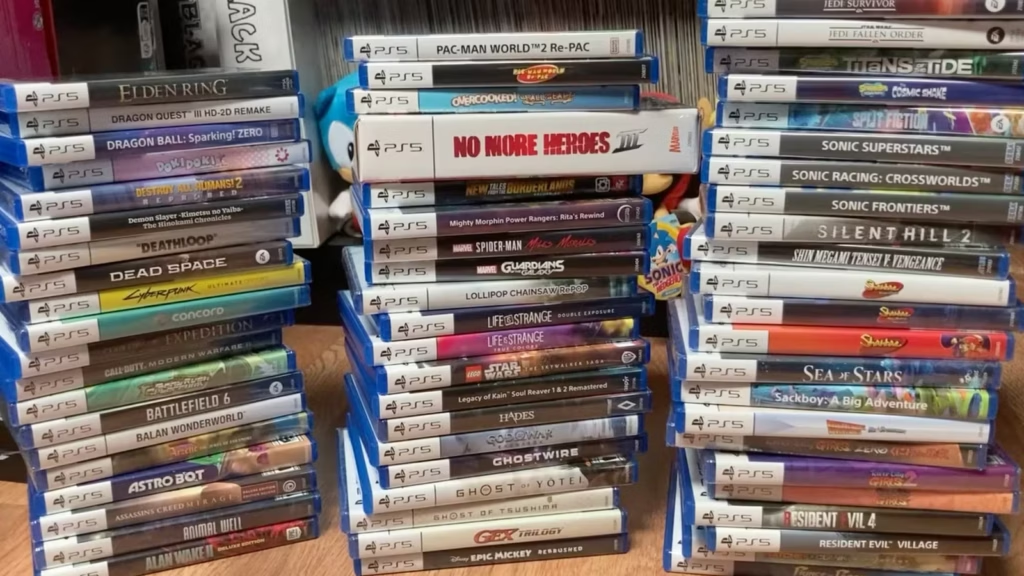
Why it matters: PlayStation game discs have been a staple of the brand since the original console debuted in 1994. Ending physical releases changes how players buy, own, lend, resell, and preserve games. It also reflects a broader shift across the gaming industry, where digital purchases have become the preferred way for many players to access new titles.
The details: According to Sony, physical disc production will end for all new PlayStation games launching from January 2028 onward. New releases will instead be available through the PlayStation Store and retail partners selling digital versions. The policy applies only to games released after the deadline and will not affect titles that have already launched or are scheduled for physical release before January 2028.
Sony said the decision reflects changing consumer behavior, noting that digital purchases now account for about 80% of its full-game software sales. The company described the transition as a response to the growing preference for digital media among PlayStation players.
Players who own PlayStation consoles with disc drives will still be able to use their existing physical game collections. Previously released games will continue to function normally, but future PlayStation titles released after the transition will no longer receive Blu-ray disc editions.
The bigger picture: Sony’s announcement follows years of steady growth in digital game distribution. Faster internet connections, larger console storage, and the convenience of downloading games have reduced demand for boxed copies. Across the industry, publishers have increasingly prioritized digital releases, while retailers have gradually reduced shelf space dedicated to physical games.
Between the lines: While Sony positions the move as a response to consumer demand, a fully digital ecosystem also simplifies distribution. Without manufacturing discs, printing packaging, or shipping inventory worldwide, publishers can reduce logistics costs while distributing games globally on launch day through online storefronts. At the same time, players become more dependent on digital accounts and online services to access their purchases.
For Filipino gamers: The transition could have a bigger impact in the Philippines than in markets with faster and more affordable internet. Many Filipino gamers still buy physical copies to save on large downloads, trade games with friends, or resell completed titles to offset the cost of new releases. Digital-only games also require reliable internet access and sufficient storage, particularly as modern AAA titles often exceed 100GB.
What’s next: Physical PlayStation games released before January 2028 will remain available while stocks last, and existing game libraries will continue to work on supported consoles. Starting with games released after the deadline, however, players will need to purchase new PlayStation titles digitally through the PlayStation Store or authorized retailers selling digital game codes.
Bottom line: Sony’s decision marks the end of an era for PlayStation physical discs. While digital distribution offers convenience and faster access to games, it also represents a fundamental shift in game ownership that collectors and players who value physical media will likely continue to debate.
Get the latest from WALASTECH directly on your Google feed.
Add as a preferred source on Google