

NCAP IS BACK: The Supreme Court has dismissed the consolidated petitions challenging the No Contact Apprehension Program (NCAP) in Metro Manila, ruling that the cases have become moot following the adoption of a new and uniform traffic enforcement framework under the Metro Manila Traffic Code of 2023 (MMTC 2023). The Court also lifted the temporary restraining order (TRO) that had suspended the implementation of NCAP since 2022.
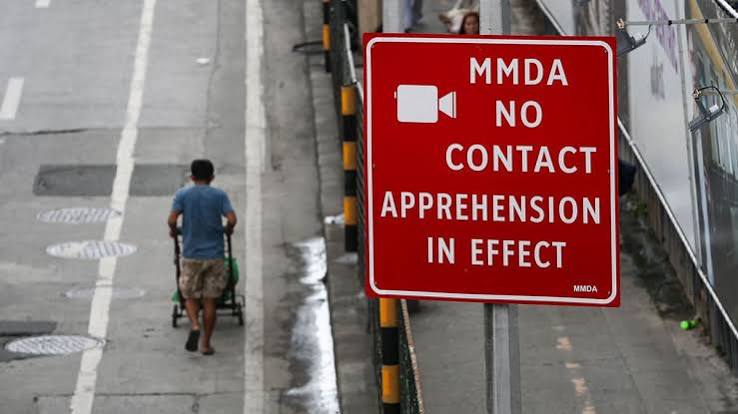
Why it matters: The decision clears the way for local government units in Metro Manila to continue implementing the revised NCAP under the MMTC 2023 framework. However, the Court clarified that it did not rule on the constitutionality of the revised NCAP itself, leaving the door open for future legal challenges.
The details: In a decision penned by Associate Justice Rodil V. Zalameda, the Supreme Court dismissed petitions filed by Kilusan sa Pagbabago ng Industriya ng Transportasyon and other groups that questioned the legality of NCAP ordinances in Muntinlupa, Parañaque, Quezon City, Valenzuela, and Manila.
The petitioners argued that NCAP violated Republic Act No. 4136, or the Land Transportation and Traffic Code, because it shifts liability from the actual driver to the registered vehicle owner. They also claimed the program violated due process since motorists may receive notices of violation only after penalties have accumulated.
The Court, however, found that these issues had already been overtaken by subsequent developments after Metro Manila adopted MMTC 2023, which established a unified framework for NCAP implementation across the region.
The bigger picture: According to the Court, MMTC 2023 introduced standardized procedures for traffic adjudication, notification of violations, data privacy safeguards, uniform penalties, online payment platforms, and coordination with the Land Transportation Office’s Land Transportation Management System.
The revised framework was implemented through MMDA Memorandum Circular No. 10, Series of 2025, which was later adopted by Muntinlupa, Parañaque, Quezon City, and Valenzuela through new ordinances. Manila also enacted its own ordinance adopting most provisions of MMTC 2023 while retaining its existing Traffic Adjudication Board.
Because the petitions only challenged the previous ordinances, the Court ruled that any decision on those measures would no longer have any practical or legal effect.
Between the lines: The Supreme Court emphasized that dismissing the petitions does not mean the previous NCAP ordinances were declared constitutional.
Instead, it said the dismissal was based on procedural grounds, including:
- Mootness following the adoption of MMTC 2023.
- Lack of legal standing by the petitioners.
- Failure to exhaust administrative remedies.
- Violation of the hierarchy of courts.
- Forum shopping.
The Court also stated that future challenges may still be filed if the revised NCAP framework gives rise to an actual legal controversy.
For motorists: With the dismissal of the petitions, the Supreme Court also lifted the temporary restraining order it issued on Aug. 30, 2022, against the Cities of Manila, Quezon City, Valenzuela, Parañaque, and Muntinlupa, as well as the Land Transportation Office and parties acting on their behalf.
Motorists should note that the decision does not settle broader constitutional questions surrounding NCAP. Instead, it allows the updated system under MMTC 2023 to continue operating unless challenged in a future case involving the revised regulations.
What’s next: Several members of the Court issued separate opinions.
Senior Associate Justice Marvic M.V.F. Leonen agreed that privacy and due process issues raised in the petitions had become moot under MMTC 2023 but argued that the Court should still have ruled on NCAP’s validity as a method of traffic enforcement. He concluded that the ordinances do not violate due process, privacy rights, or existing laws.
Associate Justice Amy C. Lazaro-Javier agreed with the outcome but likewise believed the Court should have addressed the validity of the ordinances to guide future cases. She found the NCAP ordinances to be valid exercises of local governments’ authority to regulate traffic.
Associate Justice Japar B. Dimaampao also agreed that the ordinances should not be invalidated but disagreed that the issues were already moot. While he upheld the legality of NCAP, he questioned a Valenzuela City ordinance allowing private funding for NCAP implementation, saying it could create an appearance of impropriety or undue private influence over public officials.
With the TRO lifted and cases dismissed, expect various cities in Metro Manila to resume their city-wide NCAP programs in the coming weeks.
The Bottom Line: The Supreme Court’s ruling does not declare NCAP constitutional or unconstitutional. Instead, it dismisses the challenges against the old ordinances because they have been superseded by Metro Manila’s unified traffic code. The ruling lifts the four-year-old TRO and allows the revised NCAP framework
Get the latest from WALASTECH directly on your Google feed.
Add as a preferred source on Google