

As games, videos, photos, and other files continue to take up more storage, having a reliable memory card is becoming just as important as having enough internal storage. The Fanxiang KM800 is designed for users who want more than basic expandable storage, bringing the newer microSD Express standard to a compact 256GB card.
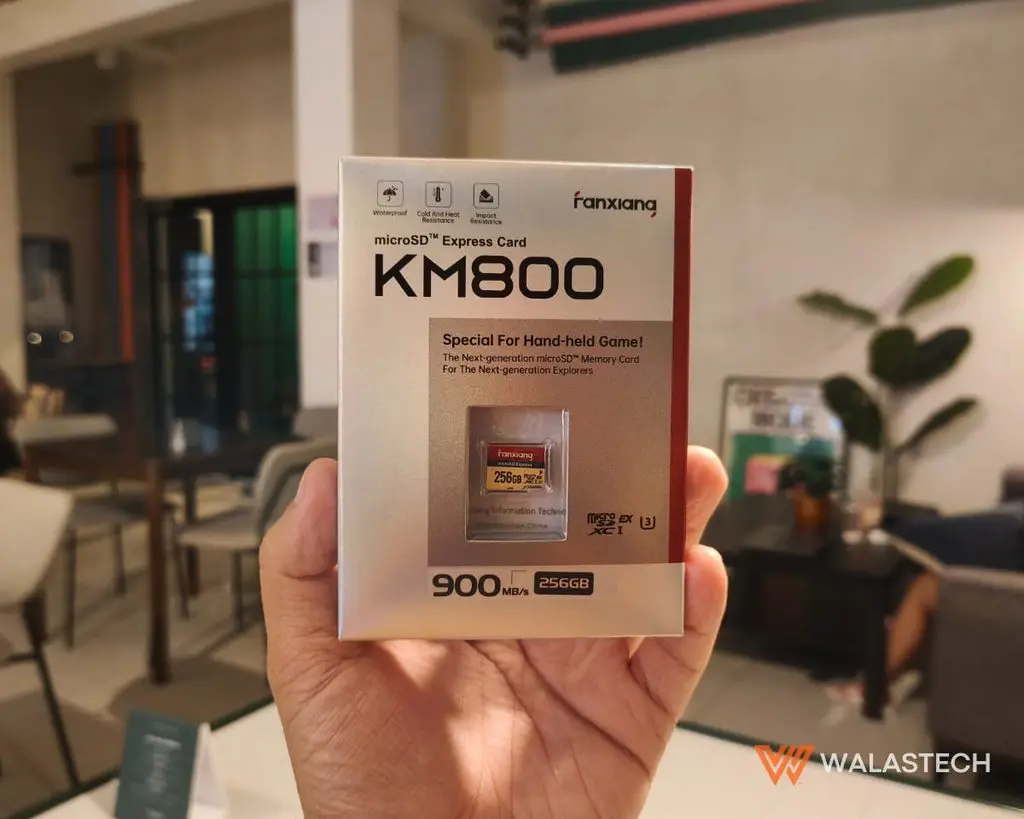
Fanxiang claims up to 900 MB/s read and 810 MB/s write speeds, putting the KM800 well above the typical performance of conventional microSD cards. It also carries U3, V30, and A1 ratings, making it suitable for gaming, media storage, and other everyday workloads.
We tested the 256GB Fanxiang KM800 using both a tablet and PC, looking at its sequential and random performance and how it handles everyday storage tasks.
Fanxiang KM800 Specifications
- Capacity: 128GB / 256GB / 512GB / 1TB
- Interface: microSD Express
- Advertised Read Speed: Up to 900 MB/s
- Advertised Write Speed: Up to 810 MB/s
- Speed Class: Class 10
- UHS Speed Class: U3
- Video Speed Class: V30
- Application Performance Class: A1
- Warranty: 5 years
- Durability: Water, dust, impact, temperature, X-ray, and magnetic resistance
Fanxiang KM800: Design and Construction
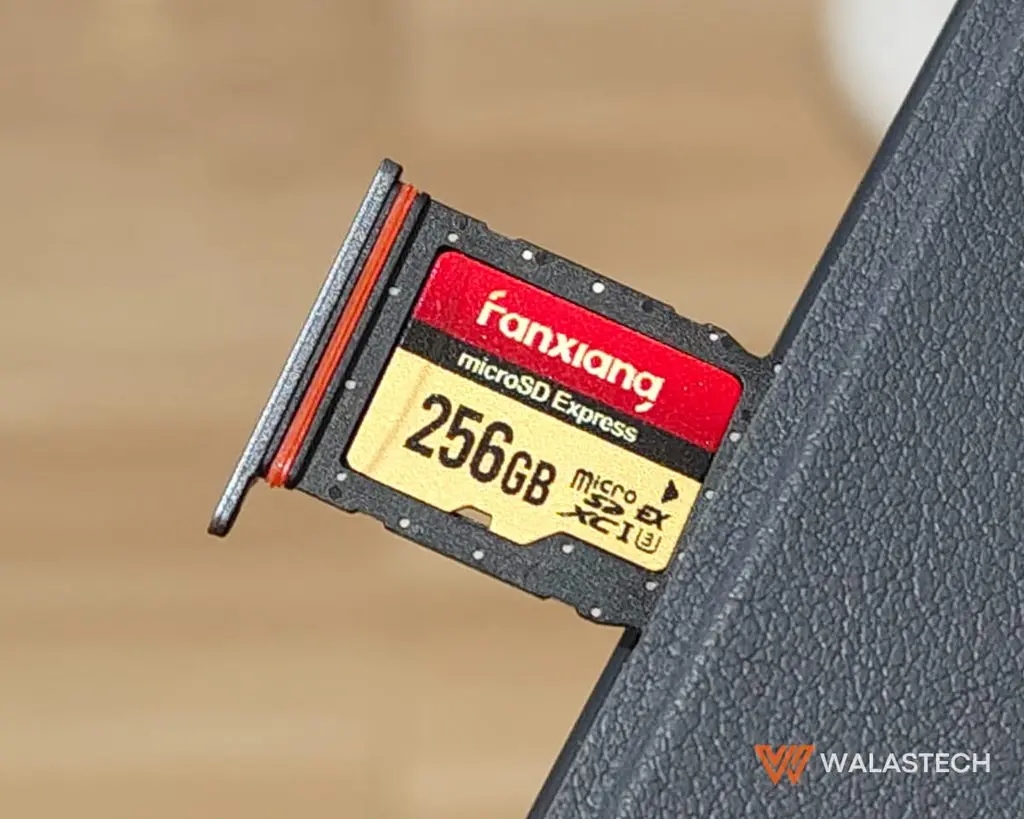
The Fanxiang KM800 uses the standard microSD form factor, so it fits into compatible devices just like a conventional microSD card.
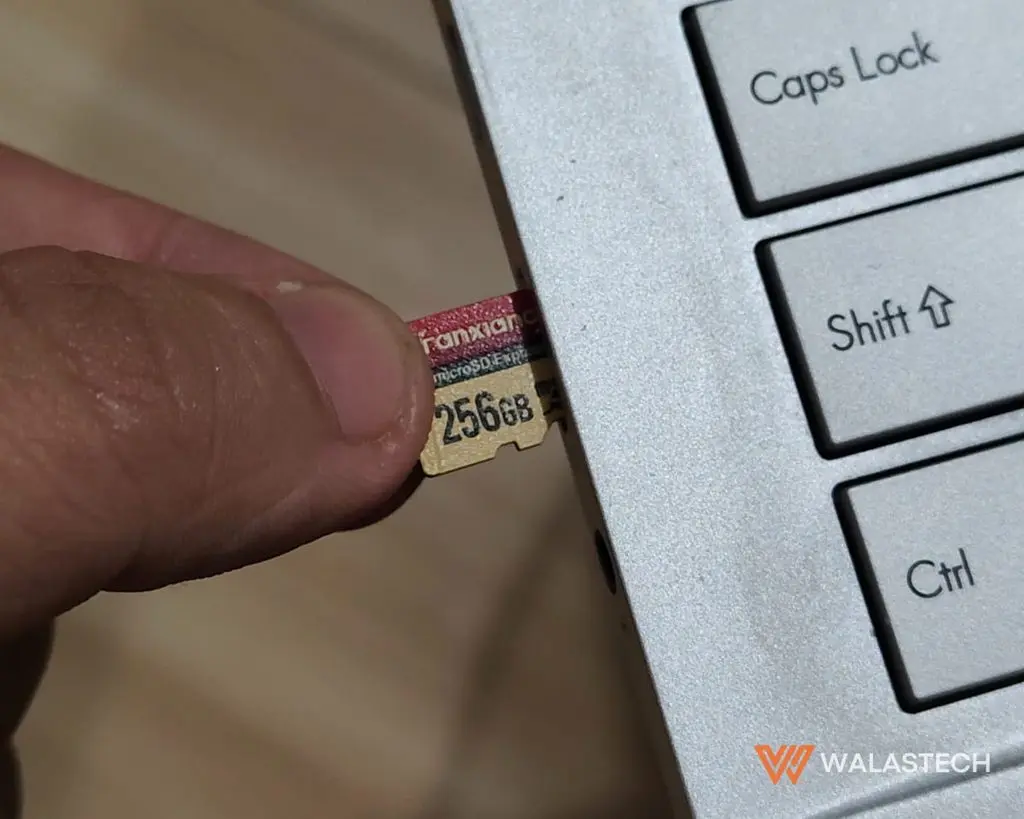
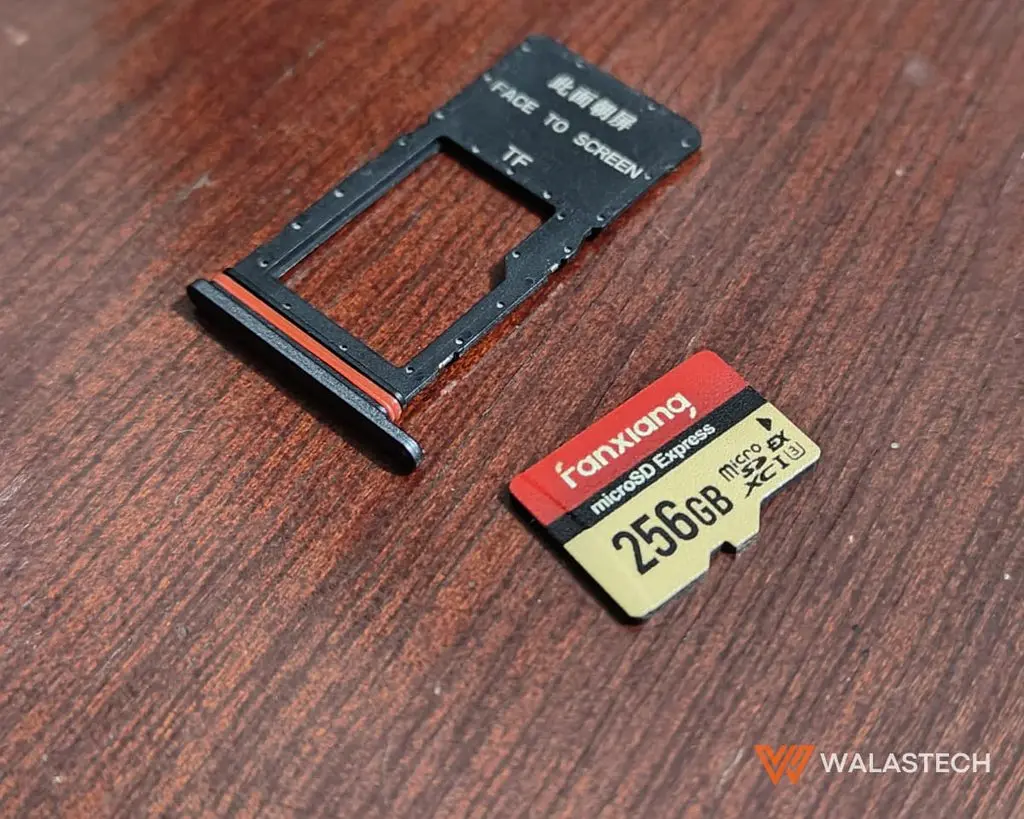
Our 256GB sample comes in Fanxiang’s red and gold design. The company’s branding is printed prominently on the card, along with the capacity, speed classifications, and microSD Express designation.
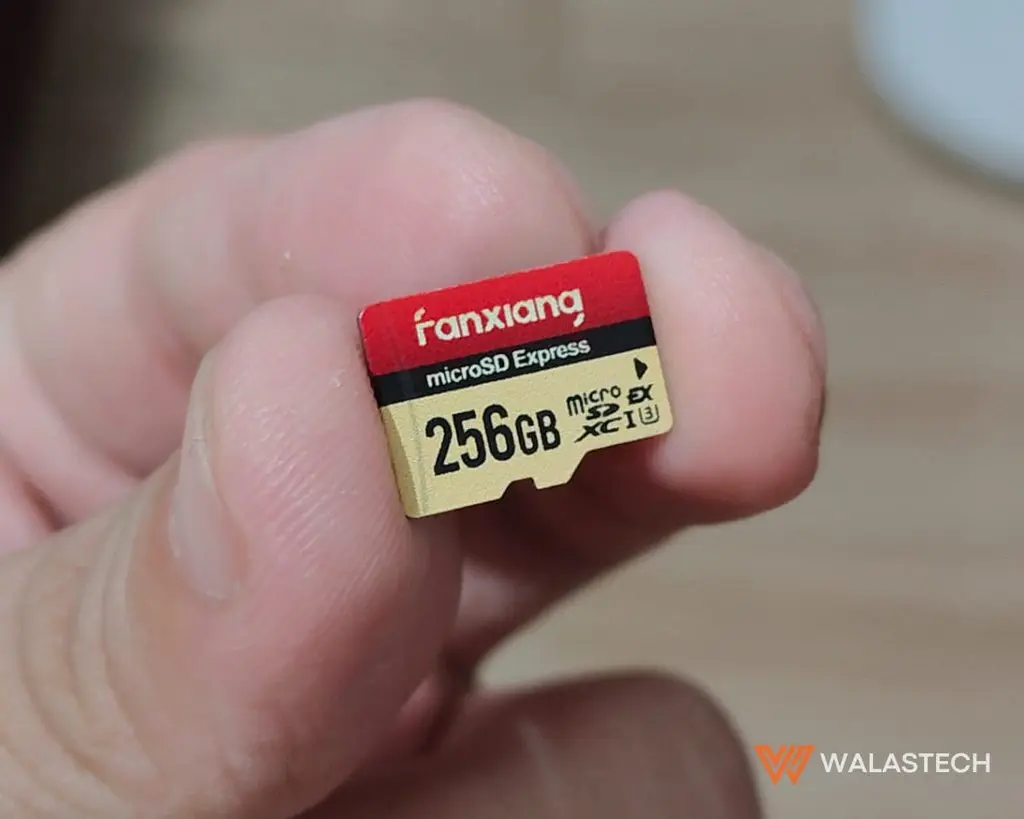
The Express branding is particularly important because it separates the KM800 from Fanxiang’s conventional microSD cards. The card is designed to take advantage of the newer PCIe/NVMe-based interface on compatible hardware.
The retail packaging follows the same red and gold design and prominently highlights the card’s 900 MB/s maximum read speed. It also positions the KM800 as a storage option for handheld gaming.
Despite its tiny size, Fanxiang also gives the KM800 several advertised durability protections. The company lists resistance against water, dust, impact, temperature extremes, X-rays, and magnetic exposure. It also comes with a five-year warranty.
Fanxiang KM800: Performance
The KM800’s sequential performance makes it useful for common storage tasks involving larger files. Moving photos, videos, documents, game files, and other large data between devices is where the card performs best. The sequential results from both the tablet and PC showed that it can maintain a useful transfer rate during these workloads.
Its V30 rating also makes the KM800 suitable for compatible video recording devices that require sustained write speeds of at least 30 MB/s.
The A1 rating also means the card is designed for application use, although microSD cards should still not be expected to perform like internal SSD storage when dealing with large numbers of small files.
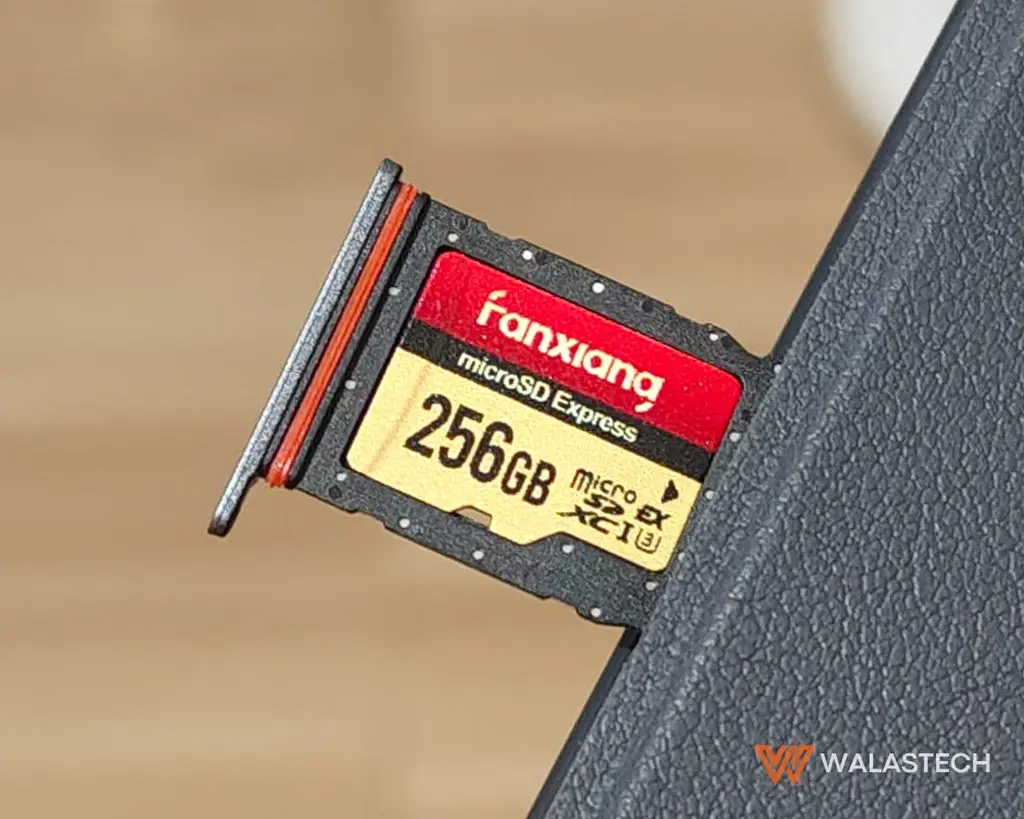
We tested the 256GB KM800 on both a tablet and a PC. On the tablet, we used Cross Platform Disk Test and SD Card Test. On the PC, we used CrystalDiskMark. The results showed consistent performance across the tests, particularly for sequential transfers.
Tablet Benchmark
Using Cross Platform Disk Test with a 1GB test file, the KM800 recorded:
- Sequential Write: 57.72 MB/s
- Sequential Read: 77.57 MB/s
- Random Write: 2.31 MB/s
- Random Read: 6.42 MB/s
The sequential write test completed in 18 seconds, while the sequential read test took 13 seconds.
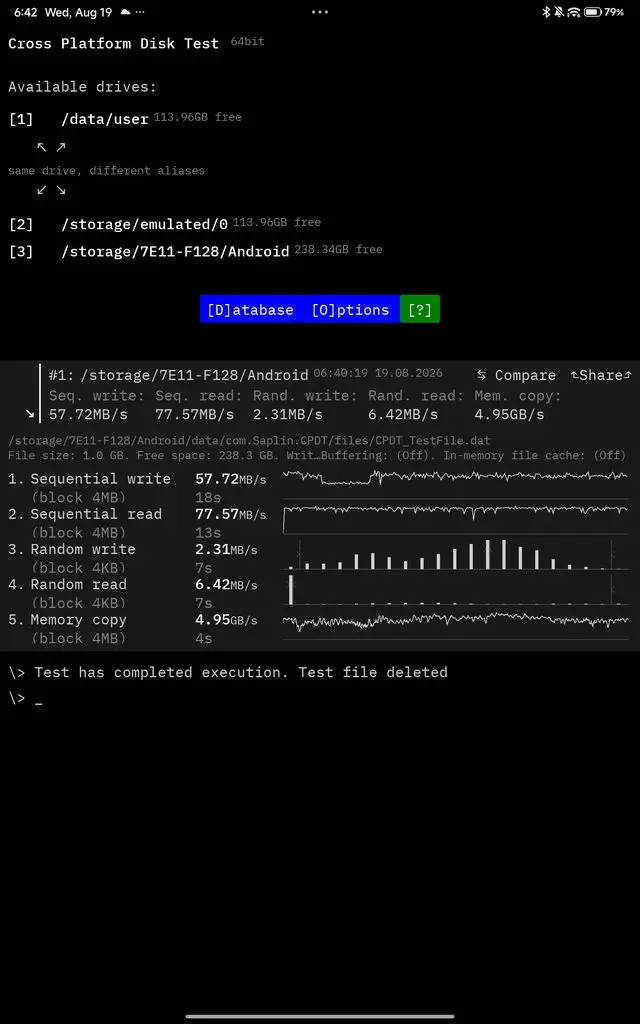
The test graphs also showed relatively stable performance throughout the benchmark. Write speeds remained around the high-50 MB/s range, while sequential read stayed around the upper-70 MB/s range.
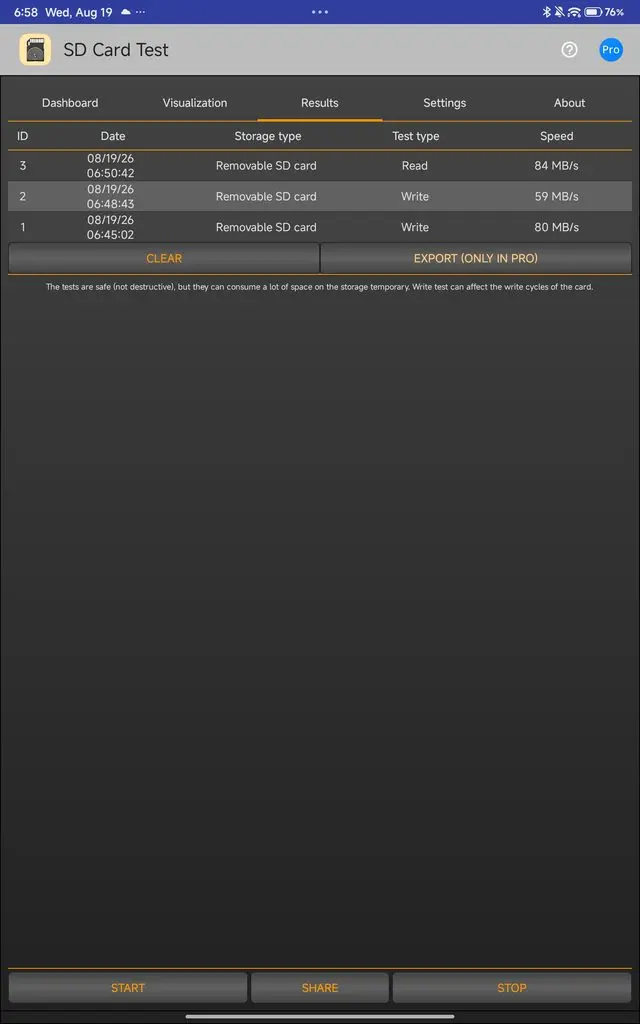
We also ran the card through SD Card Test, which recorded:
- Read: 84 MB/s
- Write: 80 MB/s
The test also reported sustained write performance at around 80 MB/s. The tablet results show that the KM800 is capable of delivering solid sequential performance in conventional microSD use.
PC Benchmark
We then tested the KM800 using CrystalDiskMark on a PC.
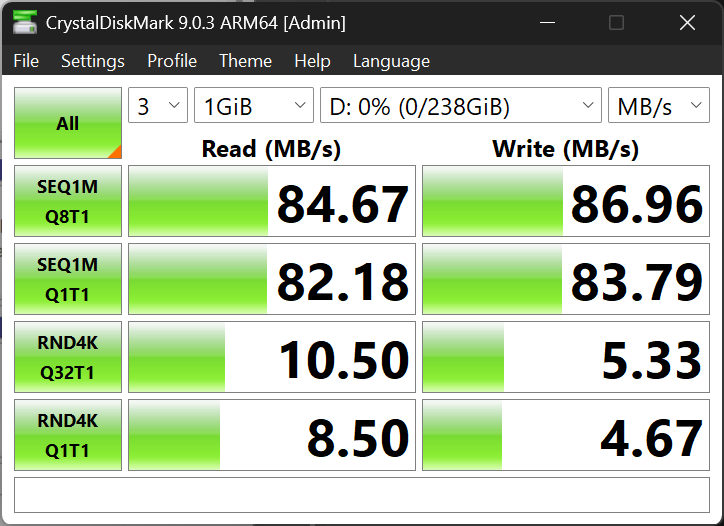
The first run recorded:
- SEQ1M Q8T1 Read: 84.67 MB/s
- SEQ1M Q8T1 Write: 86.96 MB/s
- RND4K Q32T1 Read: 10.50 MB/s
- RND4K Q32T1 Write: 5.33 MB/s
- RND4K Q1T1 Read: 8.50 MB/s
- RND4K Q1T1 Write: 4.67 MB/s
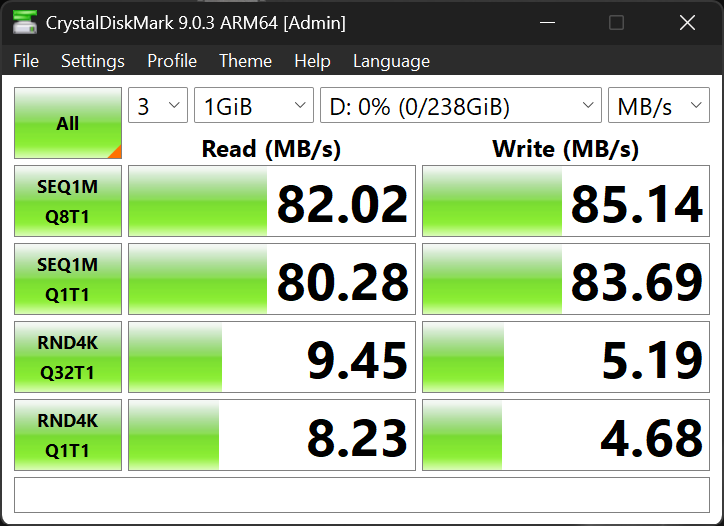
A second run produced:
- SEQ1M Q8T1 Read: 82.02 MB/s
- SEQ1M Q8T1 Write: 85.14 MB/s
- RND4K Q32T1 Read: 9.45 MB/s
- RND4K Q32T1 Write: 5.19 MB/s
- RND4K Q1T1 Read: 8.23 MB/s
- RND4K Q1T1 Write: 4.68 MB/s
The two runs were very close.
Sequential read performance ranged from 82.02 to 84.67 MB/s, while sequential write performance stayed between 85.14 and 86.96 MB/s.
That consistency is a positive result. Rather than showing large performance differences between runs, the KM800 maintained similar sequential speeds throughout our PC testing.
The KM800’s 900 MB/s read speed is one of its biggest selling points, but our benchmark results were considerably lower. The highest sequential read result we recorded was 84.67 MB/s, while the highest sequential write result was 86.96 MB/s.
This difference needs to be put into context. Our tablet and PC setups accessed the KM800 through conventional microSD connectivity rather than its PCIe/NVMe-based Express interface. As a result, the card was operating within the performance limits of the host hardware and reader.
The results therefore show how the KM800 performs in our test setups, but they do not represent the card’s maximum microSD Express capability. A native microSD Express-compatible setup would be needed to measure the performance behind Fanxiang’s 900 MB/s read and 810 MB/s write claims.
For this review, however, the important takeaway is that the KM800 remained consistent and good-performing even when operating through conventional connectivity.
For handheld gaming, the KM800’s microSD Express interface is its more interesting feature. Newer gaming devices can take advantage of the higher-speed interface, making the card a better fit for modern game storage than a conventional microSD card when the hardware supports it.
Compatibility
The KM800 is designed to work with both newer microSD Express hardware and conventional microSD devices. On compatible Express hardware, the card can take advantage of its newer PCIe/NVMe-based interface. On conventional hardware, it operates within the limits of that device’s microSD interface.
This makes compatibility an important consideration when buying the card.
If your current device supports microSD Express, the KM800’s headline performance becomes much more relevant. If your device only supports conventional microSD, the card will still function, but you will not be taking advantage of its main performance feature.
For users planning to upgrade to newer hardware, however, buying an Express card can also make sense as a way of avoiding another storage upgrade later.
Fanxiang KM800: Durability and Reliability
Fanxiang gives the KM800 a five-year warranty and advertises several durability protections, including resistance against water, dust, impact, temperature extremes, X-rays, and magnetic exposure.
These features are useful for a removable storage card that may be transferred between devices or used in portable hardware.
The card also carries U3 and V30 classifications, providing useful information about its minimum performance class for compatible workloads.
One area where information is less complete is endurance. We did not find a published TBW rating for the KM800, which means there is no stated total amount of data that the card is designed to withstand over its lifetime.
That does not automatically mean the KM800 has poor endurance. It simply means there is less published information available for users who need a card for particularly heavy write workloads.
For normal gaming, media storage, file transfers, and everyday use, the available specifications provide a reasonable picture of what the card is designed to handle.
The Rundown
Best For: The Fanxiang KM800 is best for handheld gamers, especially those using newer devices with microSD Express support.
The 256GB capacity gives users plenty of room for games and other large files, while the U3 and V30 ratings make it useful beyond gaming. It can also be a good option for users who regularly move large files or store photos and videos.
It is particularly interesting for users who want to move to the newer microSD Express standard and have hardware capable of taking advantage of it.
Skip This If: Skip this if your device only supports conventional microSD and you do not plan to upgrade to microSD Express-compatible hardware anytime soon. The KM800 will still work in conventional microSD devices, but its biggest performance advantage will not be utilized.
If all you need is additional storage for an older phone, tablet, camera, or other device, a conventional microSD card may provide better value.
WalasTech Worthy Feature: The Fanxiang KM800 earns a spot in the WalasTech Worthy feature for combining high-capacity storage, modern microSD Express support, and useful speed classifications in a compact card.
Our testing also showed consistent sequential performance across both tablet and PC benchmarks, with PC sequential speeds reaching more than 80 MB/s despite being tested through conventional connectivity.
The KM800 is not simply relying on its 900 MB/s headline figure. Its U3 and V30 ratings, five-year warranty, advertised durability protections, and available capacities up to 1TB make it a more complete storage solution.
Its biggest advantage will depend on the device it is paired with, but for users with compatible hardware, the KM800 offers a practical way to add storage while moving to a newer memory-card standard.
The Fanxiang KM800 MicroSD Express card is not yet available in the Philippines, but we have seen online listings on Amazon with prices starting at USD 65.99 (~PHP 4,100) for 256GB and USD 119.99 (~PHP 7,400) for 512GB. Fanxiang also has other products available at its Shopee store so expect it to land locally soon.
Get the latest from WALASTECH directly on your Google feed.
Add as a preferred source on Google