

A lot of phones are lined up to be released in the Philippines in the next few weeks, and a few of my tech friends are posting about the sameness in design of smartphones being released this year. That actually is true. In fact, that is very obvious for most people.
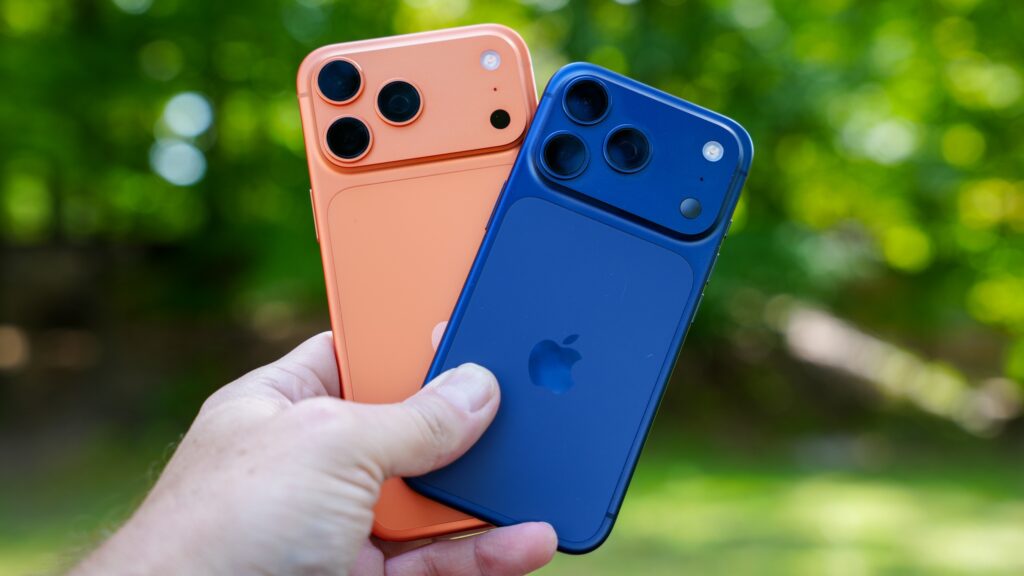
Walk into any phone store today and line up the latest devices. From a distance, many of them start to blur into the same shape. Glass front, glass back, flat or slightly curved edges, and a camera system placed in a familiar position. The differences are still there, but they are harder to notice at first glance.
A common reaction to this is to assume one brand is setting the design and others are simply following it. That interpretation is understandable, but it does not fully explain how smartphone design actually develops once a category becomes mature. Let’s break down why smartphone designs tend to converge into similar forms over time.
In most established industries, product design tends to move toward what is called a dominant design. This is the point where a particular form becomes widely accepted because it works well enough for users, is practical to manufacture, and meets market expectations. In smartphones, that form is now the large touchscreen device with a minimal body and a defined camera module. Once this happens, the design stops being a wide field of experimentation and becomes a shared starting point.
At that stage, the idea of a single leader becomes more about validation than invention. When a major brand releases a successful design at scale, it signals that the market accepts that direction. Other companies do not simply react to one another. They respond to a proven reference point that reduces uncertainty. It becomes less about chasing a competitor and more about staying within what is already proven to work.
This behavior is explained by a concept called mimetic isomorphism. In uncertain markets, companies tend to follow successful examples to reduce risk. If a certain camera layout, material finish, or frame shape already works, choosing something radically different becomes harder to justify internally. Investors, suppliers, and even consumers often favor what feels familiar.
This is where design alignment begins to look like imitation from the outside. In reality, companies are often working under similar constraints. They use comparable components, face similar thermal limits, battery requirements, and production methods. These shared conditions naturally narrow the range of possible design outcomes. When different teams solve the same set of problems, the results often start to resemble each other.
There is also a business layer behind this behavior. In uncertain markets, some tend to reduce risk by moving closer to established examples. This is why product strategies often cluster around successful patterns. Choosing a radically different design introduces uncertainty not only in consumer response but also in manufacturing, supply chains, and long-term support. As a result, many brands prefer to operate within a familiar design boundary rather than outside it.
From a consumer perspective, repeated exposure to similar designs leads to another effect. When visual differences become small, the brain begins to process devices as less distinct from one another. At that point, the product becomes easier to compare on price, specifications, and ecosystem rather than on appearance. Design loses some of its role as a differentiator and becomes more of a baseline expectation.
This is also where the idea of brand distinctiveness becomes important. In crowded markets, recognition matters as much as performance. If a device cannot be easily identified without looking closely, it loses part of its identity in the marketplace. As more brands align around similar shapes and layouts, standing out visually becomes more difficult, even when internal hardware continues to improve.
Designers also operate within a narrow psychological balance. People tend to prefer products that feel familiar, but still offer some level of novelty. If a device feels too unfamiliar, it risks rejection. If it feels too familiar, it becomes forgettable. Most companies aim for a middle ground where innovation is present but not disruptive enough to disrupt acceptance. Over time, this balance tends to push products toward similar visual outcomes.
Research on brand distinctiveness suggests that recognition matters more than difference. If a device cannot be identified at a glance, it loses one of its strongest advantages in a crowded market. When every phone follows the same visual language, standing out becomes harder, even if the hardware inside is different.
What looks like similarity between brands is often the result of shared direction rather than direct imitation. It is a combination of established design patterns, technical constraints, and market behavior shaping the same space from different sides. In that sense, smartphone design is less about one company defining the rest, and more about many companies converging toward the same set of answers.
The real shift, then, is not about who leads and who follows. It is about how narrow the range of possible designs becomes once an industry reaches maturity, and what that means for how we perceive differences in the products we use every day.
When everything starts to look familiar, differences become easier to notice. That raises a new question for both brands and consumers. If a device breaks away from the standard and builds a clear identity, will it be celebrated or dismissed for being too different?
This is Root Access – a WalasTech Editorial section where I share editorial opinions on how tech impacts Filipinos. Here, I tackle pressing issues, trends, and topics that challenge the norm in tech, culture, and society. Root Access unpacks complex topics with an unfiltered approach.
Legal Disclaimer: This article focuses on design convergence, not claims of direct imitation between brands.
Get the latest from WALASTECH directly on your Google feed.
Add as a preferred source on Google