

The Infinix GT 50 Pro puts its focus on one thing early: keeping performance stable when heat builds up. At the center of that is its liquid cooling system, designed to pull heat away from the chipset and keep frame rates from dropping during long sessions.
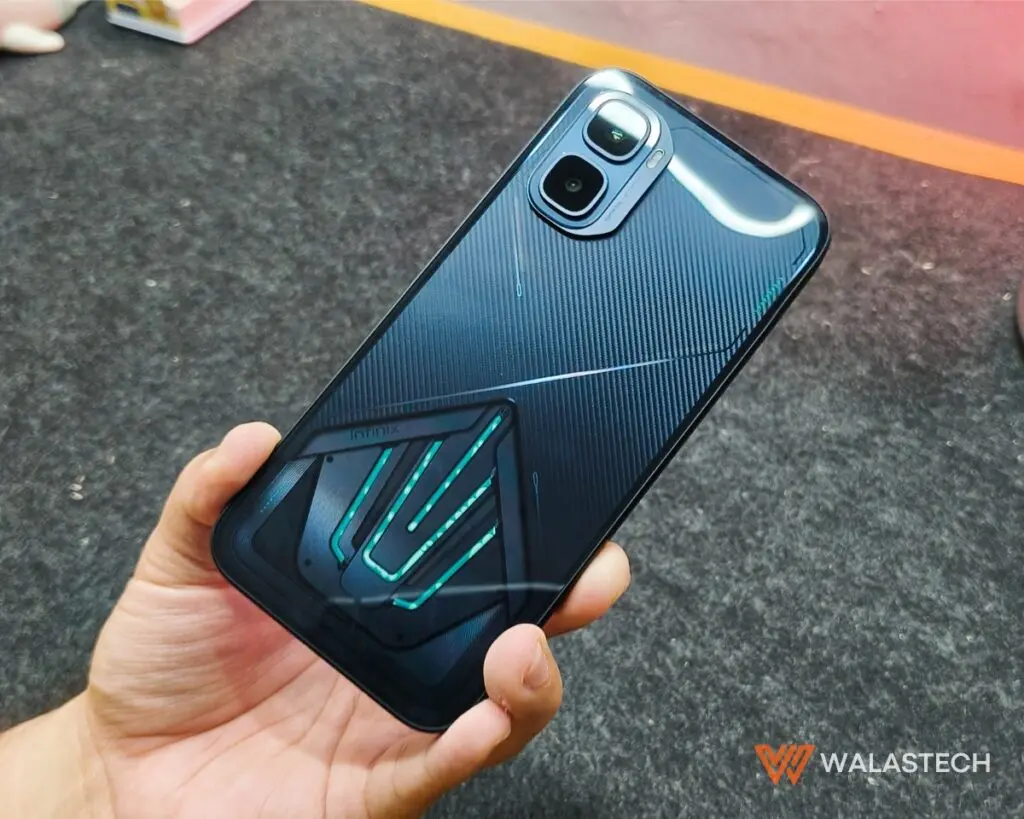
But outside of gaming, the reality shifts. This is still a phone you carry every day. It needs to last on a single charge, handle routine tasks without friction, and capture moments well enough to share. Does it warrant to be more than just a gaming phone? Here is our full review.
Infinix GT 50 Pro Specifications
- Display: 6.78-inch AMOLED, 1.5K resolution, 144Hz refresh rate, up to 4500 nits peak brightness, Gorilla Glass 7i
- Processor: MediaTek Dimensity 8400 Ultimate
- RAM: 12GB
- Storage: 256GB / 512GB
- Rear Cameras: 50MP main with OIS, 8MP ultra-wide
- Selfie Camera: 13MP
- Connectivity: 5G, Wi-Fi, Bluetooth, NFC, USB-C
- Other Features: Open-cut GT Triggers, RGB lighting, Dolby Atmos stereo speakers, N1 network chip, IP64 Dust and Water Resistance
- OS: XOS 16 (Android 16)
- Battery and Fast Charge Tech: 6500mAh or 6150mAh, 45W wired fast charging, 30W wireless charging, wireless bypass charging
- Colors: Black, Silver, Red
What’s inside the box: We got the Cooling Edition pack from Infinix Headquarters, which contained two boxes. The first is the phone box itself with the phone, documents, the hard MagCool plastic case, the 45-watt charger, documents, the SIM tray ejector, and a USB-A to USB-C Cable.
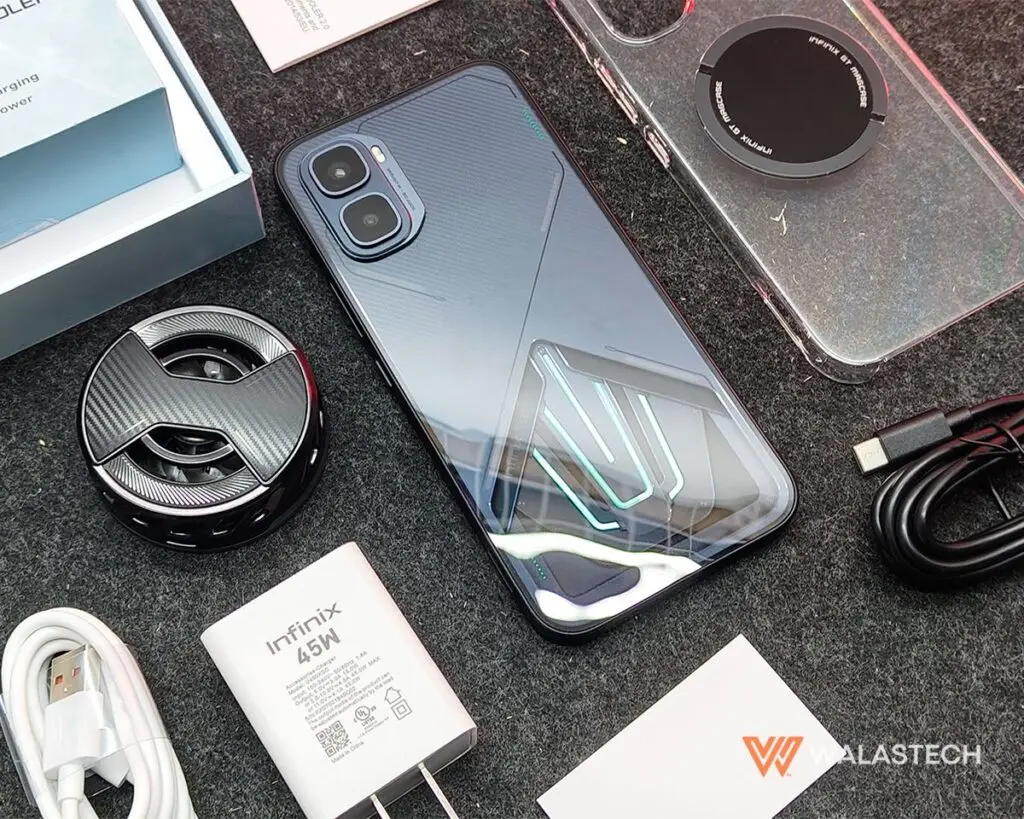
The other box contains the wireless MagCool accessory box with the MagCool 2.0 wireless charger, documents, and a USB-C to USB-C charger.
Design and Construction
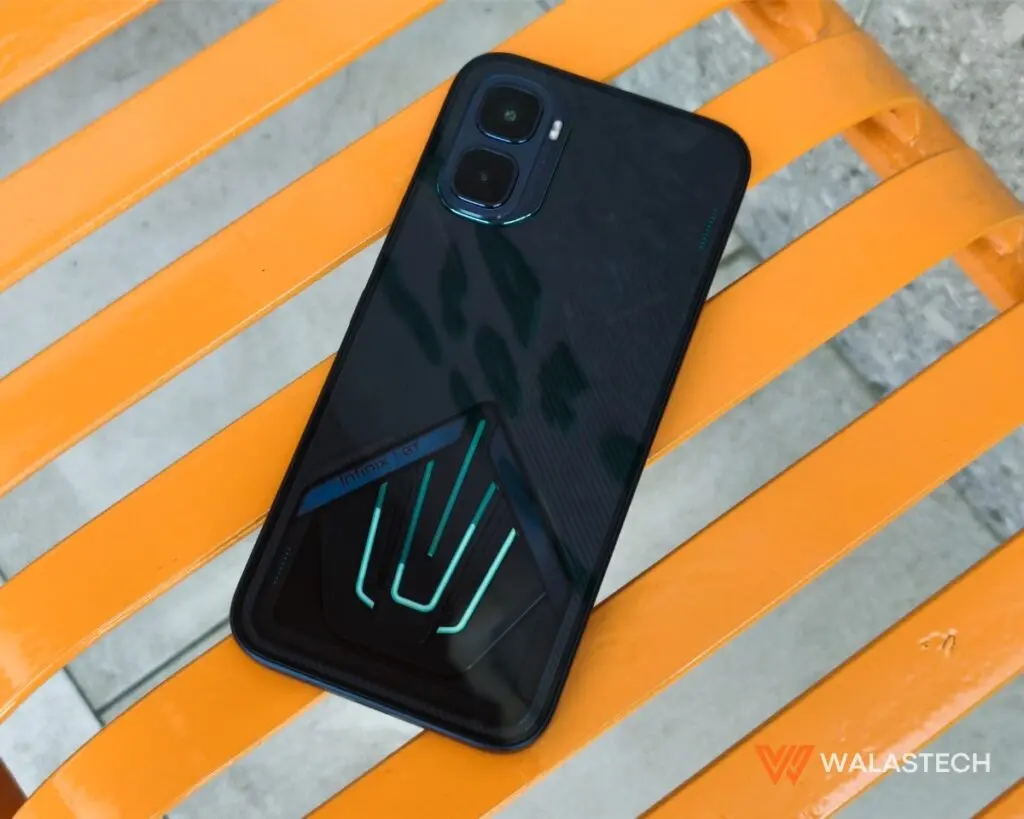
The Infinix GT 50 Pro makes its identity clear even before you turn it on. This is not a neutral-looking phone. It leans into a hypercar aesthetic with a layered back panel that mixes kevlar-inspired textures, mechanical lines, and lighting elements to create a sense of depth. The design is inspired by mechanical and industrial cues, which gives it a more aggressive look compared to typical smartphones in the same price range.
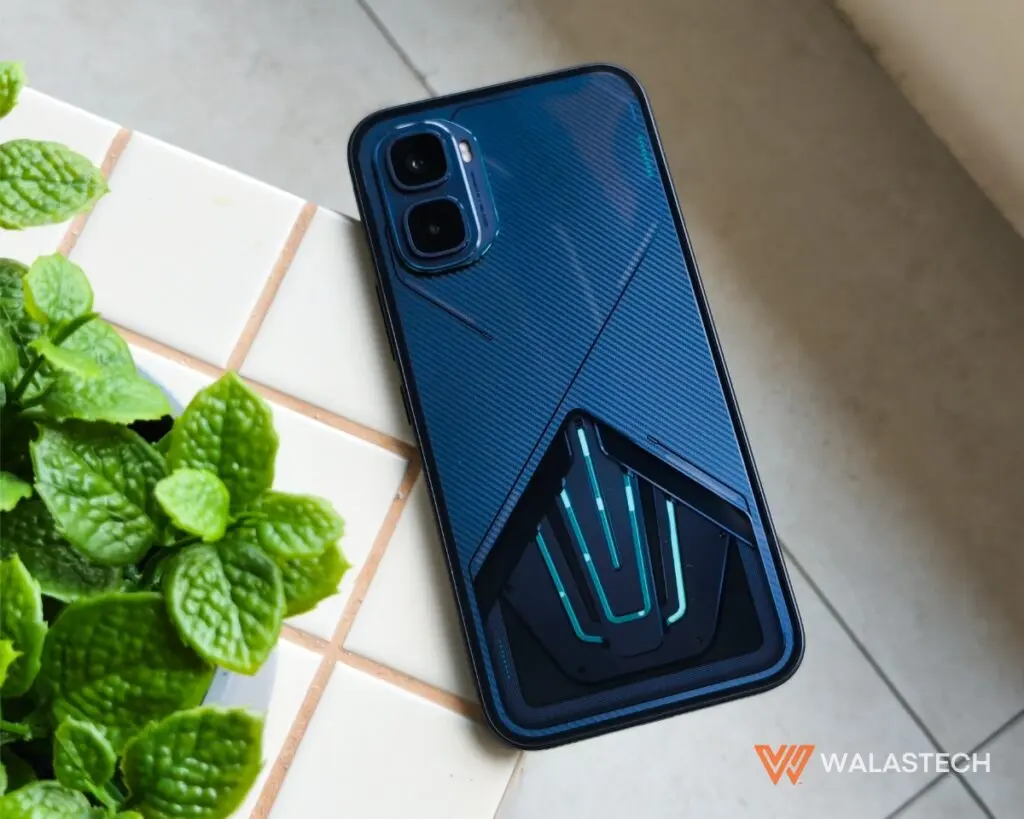
The back panel is not just about looks. It uses a structured layout that separates visual zones, making the lighting and patterns feel intentional rather than decorative. The RGB lighting strips are integrated into this Kevlar-like pattern and can be customized across different scenarios. They respond to notifications, charging status, and even in-game events, adding a layer of visual feedback that aligns with the phone’s gaming focus. It is not essential, but it reinforces the overall experience.
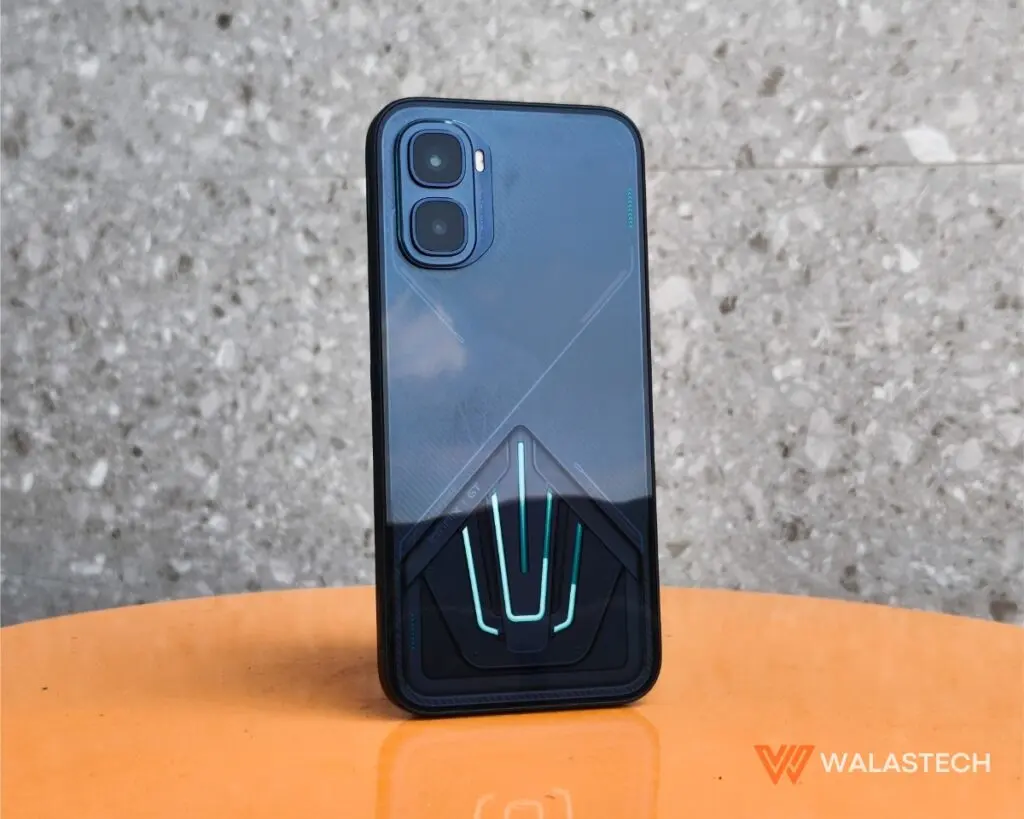
Then there’s the pipeline window design at the bottom that highlights one of the key features of this phone: liquid cooling. When it works, you can see bubbles flowing in and out of these pipes.
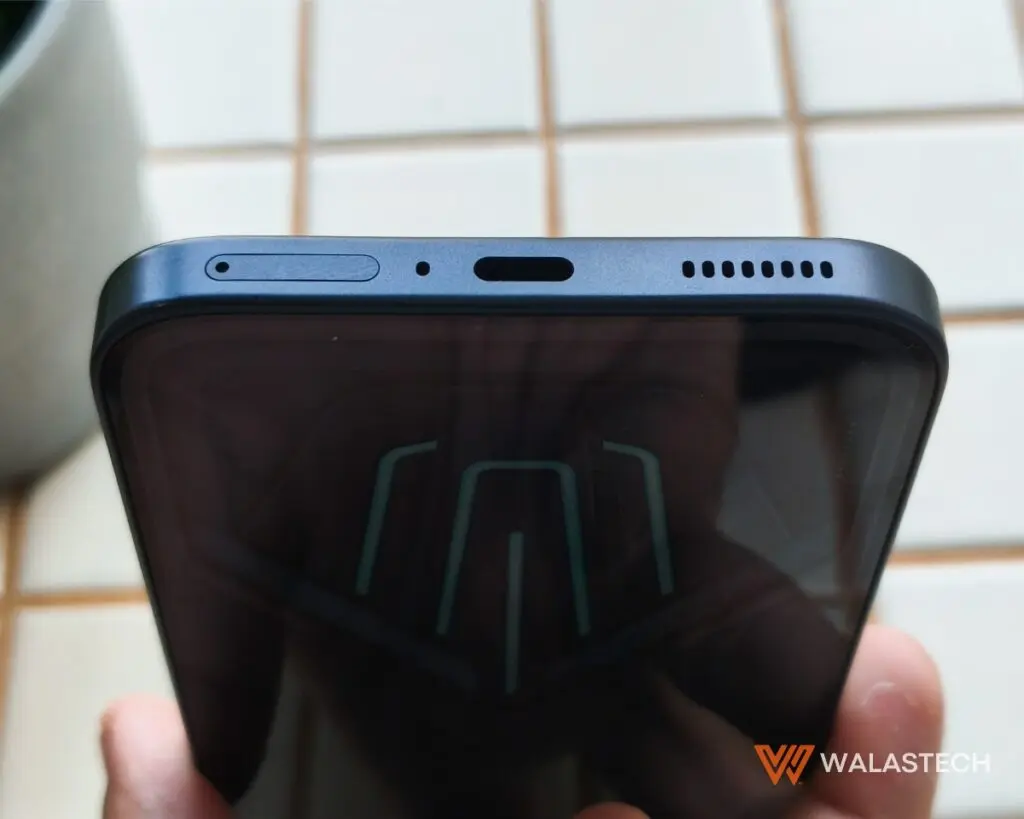
In terms of build, the phone feels solid and well-assembled. The frame is flat, which helps with grip, especially during landscape use. This matters for gaming, where stability and hand placement can affect comfort over long sessions. The edges are slightly refined to avoid sharpness, so it does not feel uncomfortable despite its angular design.
The weight is noticeable, and that is expected. The large battery and internal cooling components add bulk, making it heavier than standard midrange phones. However, this added weight contributes to a more planted feel in the hand, which some users may prefer during gaming. It does not feel fragile or hollow.
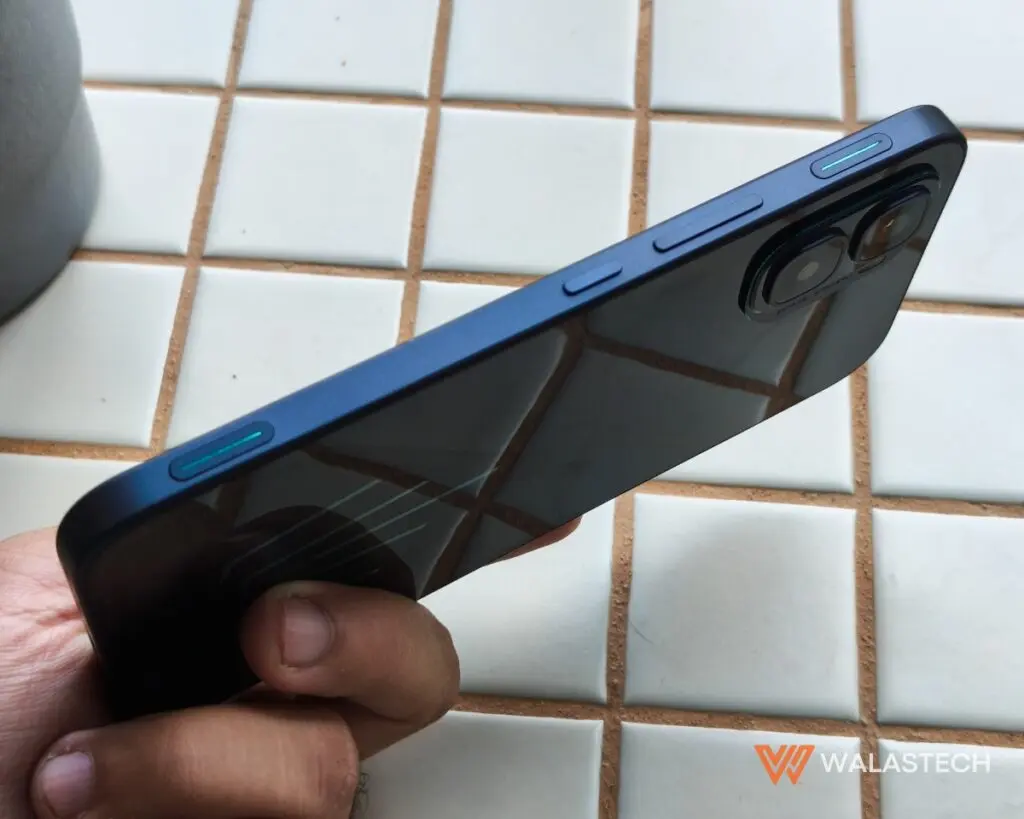
The camera module is relatively clean compared to the rest of the design. It does not overly dominate the back panel, which helps balance the overall look. The layout remains functional without disrupting the design language.
Display and Audio
The display on the Infinix GT 50 Pro is not just built for visual appeal. It is designed to support long gaming sessions, where clarity, smoothness, and eye comfort all matter. It uses a 6.78-inch AMOLED panel with 1.5K resolution, which already puts it above standard Full HD screens in terms of sharpness. Text, UI elements, and in-game details appear crisp without needing to push resolution too high, which helps balance performance and battery life.
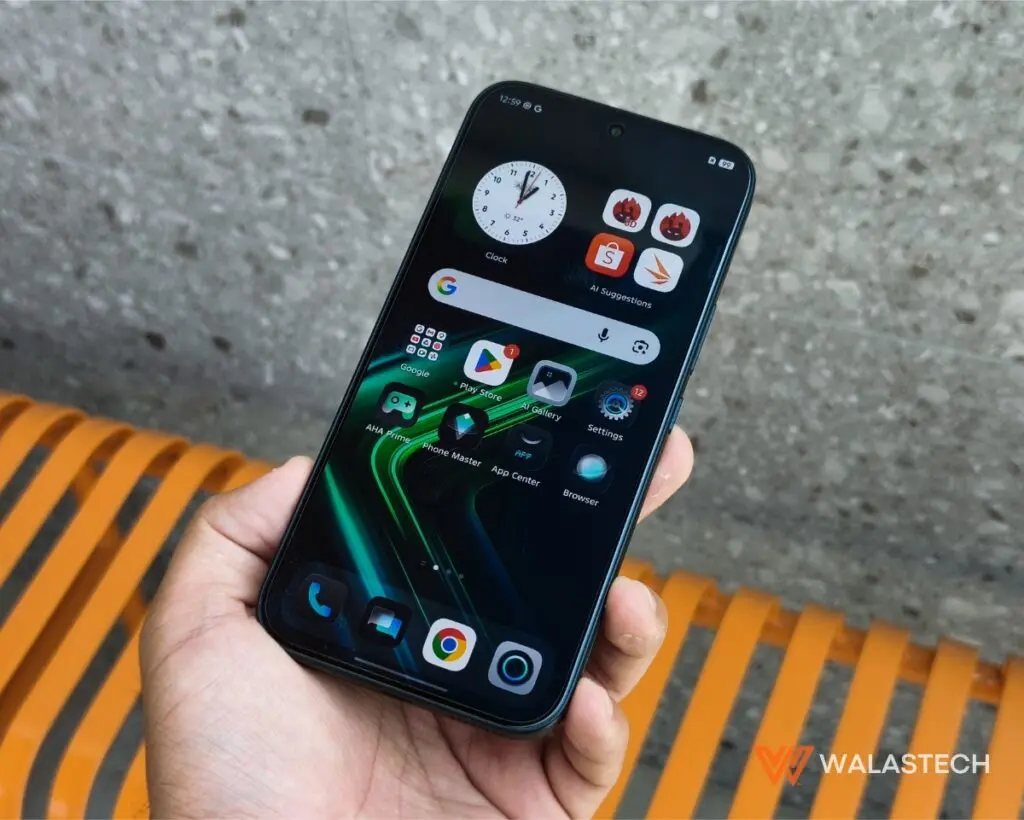
What stands out immediately is the refresh rate. The panel supports up to 144Hz, allowing for very smooth motion when scrolling or gaming. More importantly, it is paired with adaptive refresh rate scaling from 30Hz to 144Hz. This means the phone can lower refresh rates during static use and ramp up when needed, helping manage power consumption without sacrificing responsiveness.
Brightness is another key highlight. The display can reach up to 4500 nits peak brightness in supported scenarios. In real-world use, this translates to strong outdoor visibility, even under direct sunlight. It also helps HDR content look more dynamic, with brighter highlights and better contrast between light and dark areas.
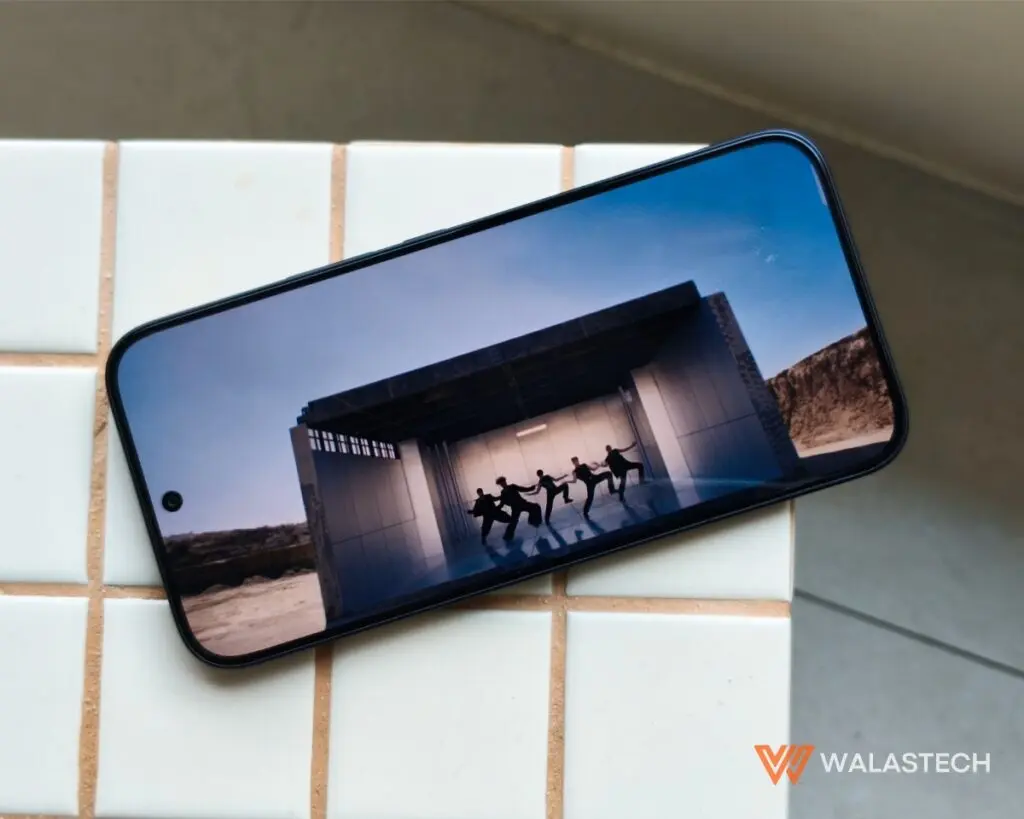
Color performance is handled well, with full DCI-P3 coverage. Colors appear vibrant without looking overly saturated, which works well for both gaming and media consumption. The AMOLED panel also provides deep blacks and high contrast, making darker scenes in games easier to distinguish.
For extended use, especially gaming, eye comfort becomes important. The GT 50 Pro uses high-frequency PWM dimming up to 2304Hz. This reduces flicker at lower brightness levels, which can help lessen eye strain during long sessions. There is also low blue light certification at the hardware level, adding another layer of comfort for prolonged viewing.
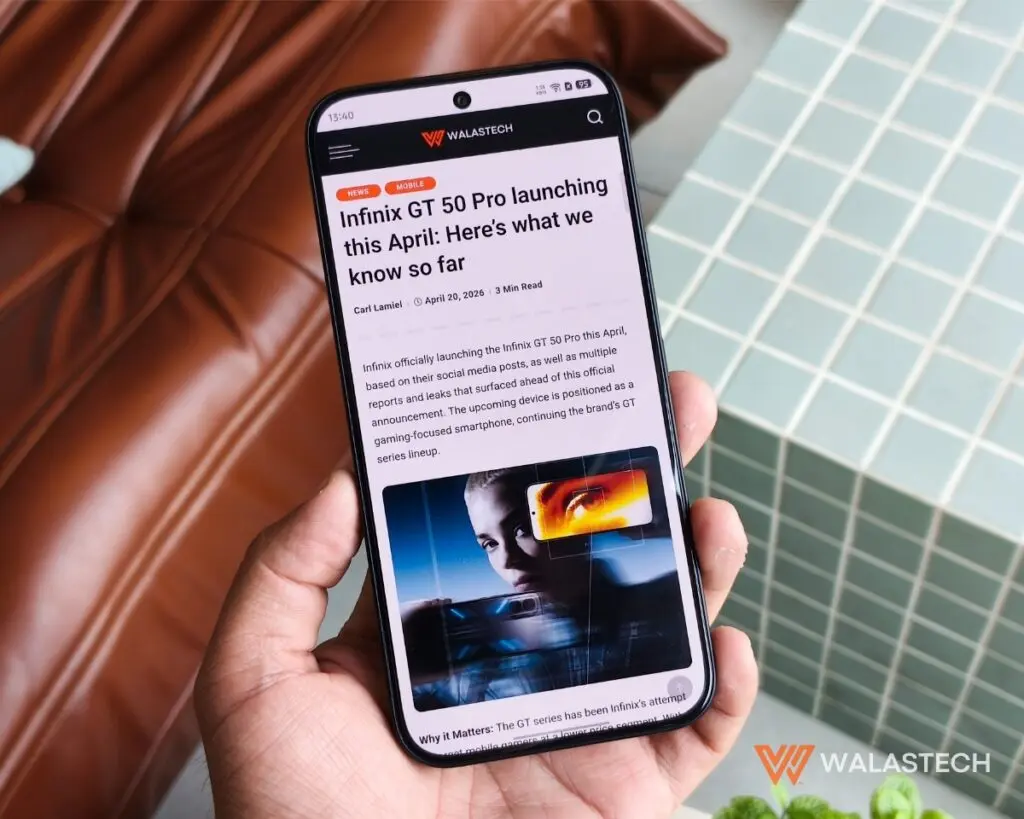
The display also includes a feature aimed at reducing motion discomfort. It helps smooth out transitions and reduce visual fatigue during fast-moving scenes. This is particularly useful in games where rapid camera movement can otherwise feel disorienting over time.
The screen-to-body ratio sits at around 93 percent, with slim bezels that keep the focus on the content. The flat panel design also helps with touch accuracy, especially near the edges, which is important for gaming controls.
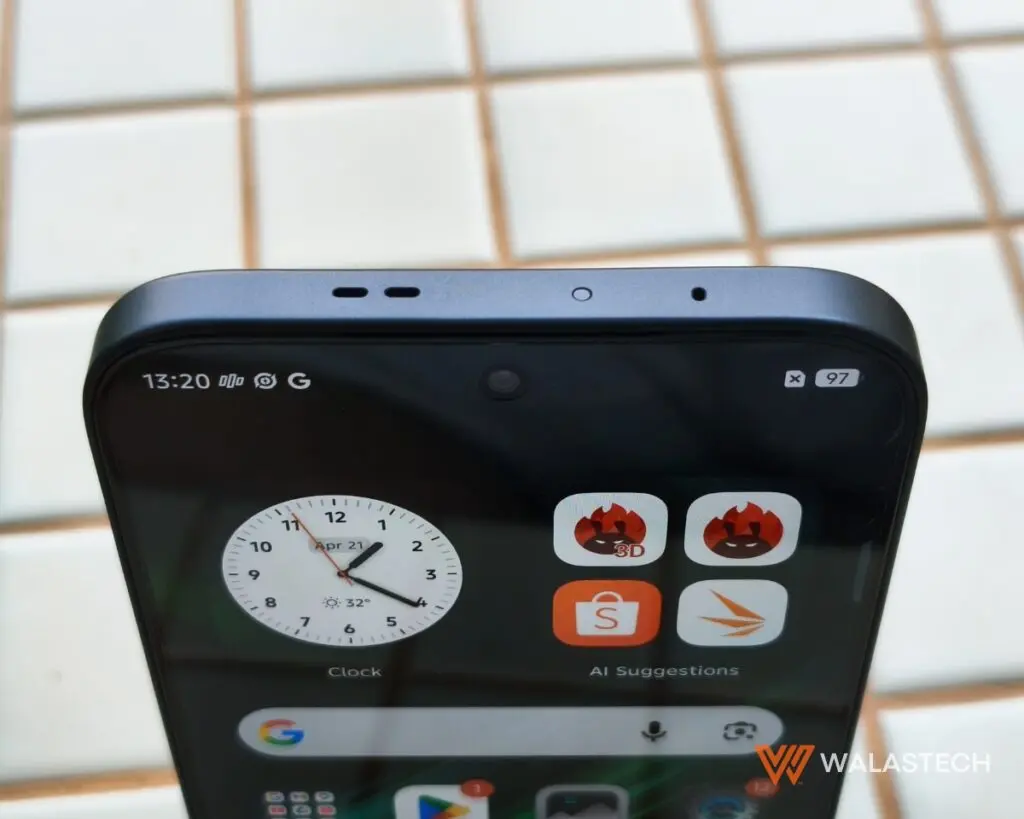
Audio complements the display experience through dual stereo speakers tuned with Dolby Atmos. The output is loud and clear, with enough separation to distinguish directional sounds in games. This adds to immersion, especially when playing without headphones. Different audio modes adjust sound profiles depending on whether you are gaming, watching videos, or listening to music.
Camera
The Infinix GT 50 Pro delivers a camera setup that is practical and reliable, though it is not the main focus of the device. It uses a 50MP main sensor with an f/1.8 aperture and optical image stabilization, paired with an 8MP ultra-wide camera and supported by a secondary sensor for depth and macro functions.
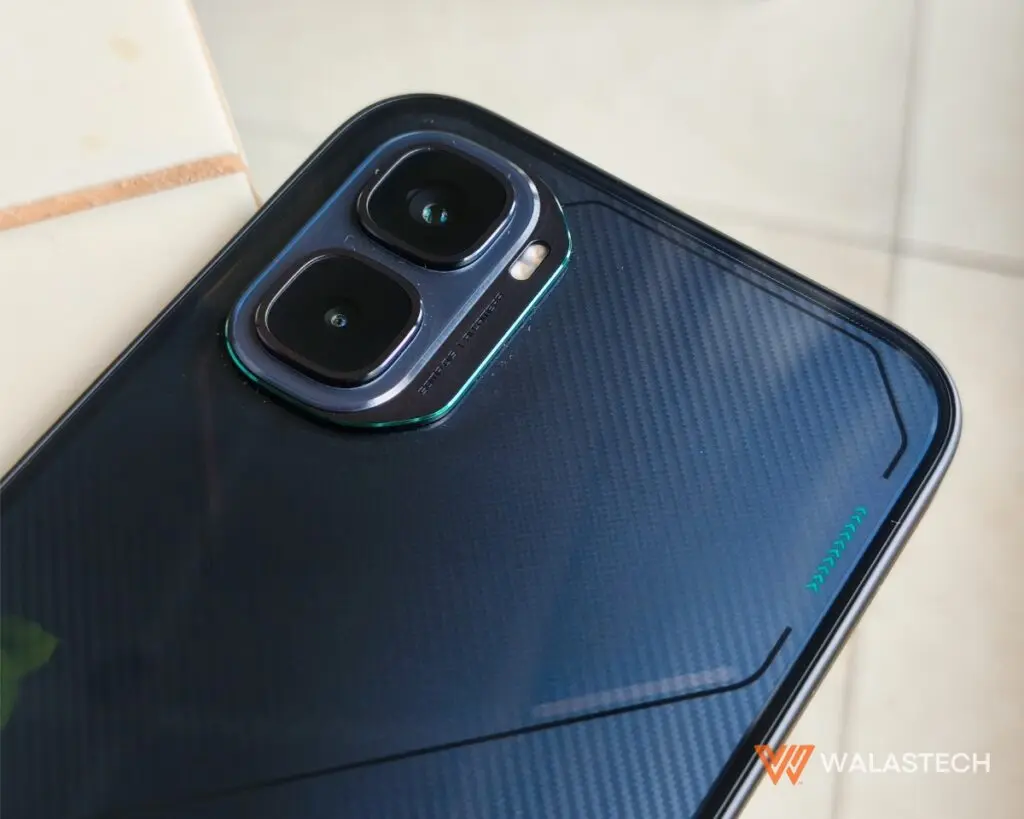
In daylight, the main camera produces sharp and well-defined images. Detail retention is strong, with textures in the foreground staying clear thanks to pixel binning that effectively improves light capture. Colors appear natural, and dynamic range is good enough to handle bright skies and darker areas in the same frame without heavy clipping.
The addition of OIS is a noticeable improvement. It helps reduce small hand movements, resulting in sharper images even when shooting handheld. This is especially useful indoors or in slightly dim conditions where stability matters more.
Low-light performance is supported by a dedicated night mode. Images taken in darker environments are brighter, with decent highlight control. Light sources such as street lamps are not overly blown out, and overall exposure remains balanced. There is still some visible noise in shadow areas, and the processing can sometimes lift shadows too aggressively, giving images a slightly processed look. However, results remain usable for social media and casual sharing.
The 8MP ultra-wide camera adds flexibility but comes with expected limitations. There is a visible drop in detail compared to the main sensor, and edges can appear soft with some color fringing. Still, the wide field of view is useful for landscapes and group shots.
The secondary sensor assists with portrait and macro shots. It helps improve edge detection in portrait mode, though subject separation is not always perfect. Macro performance is basic and works best in well-lit conditions.
For video, the rear camera supports up to 4K at 60 frames per second. Stabilization is handled through a combination of OIS and electronic stabilization, resulting in smoother footage even while walking. Video quality is consistent for casual recording and short-form content.
The 13MP front camera supports up to 4K at 30 frames per second. It handles skin tones reasonably well, though it can struggle with exposure in scenes with strong backlighting. It remains suitable for selfies and video calls, especially in good lighting conditions.
Performance
Software
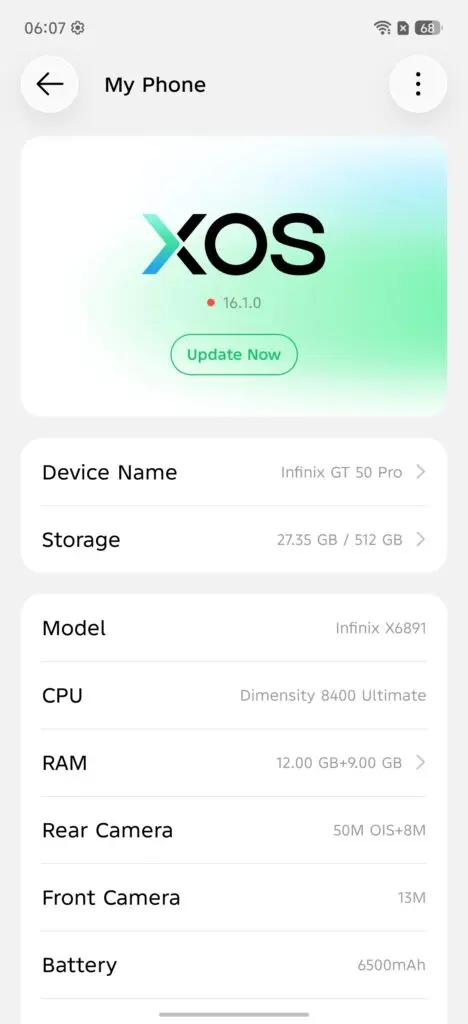
Before getting into raw power, the experience of the Infinix GT 50 Pro starts with its software. Running on XOS 16 based on Android 16, the system is tuned heavily around gaming behavior rather than just general responsiveness. There is a clear priority here: reduce interruptions, stabilize performance, and give users more control during gameplay.
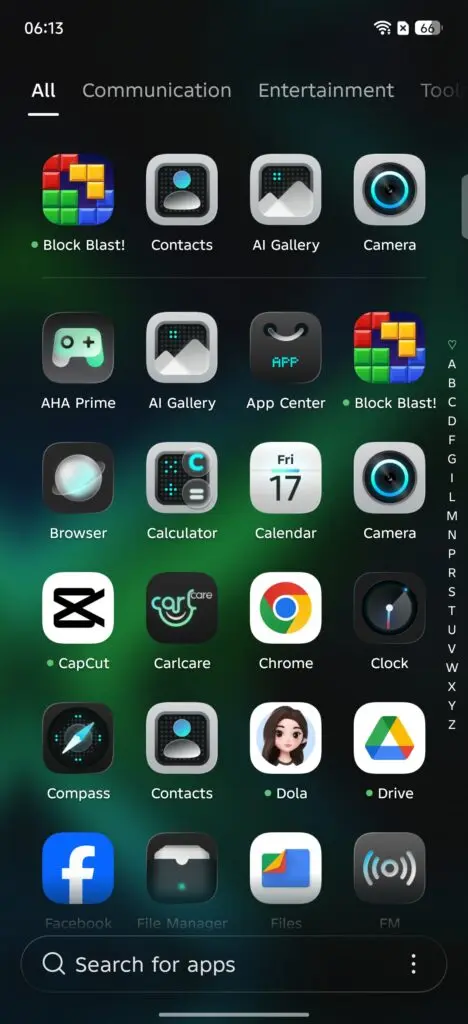
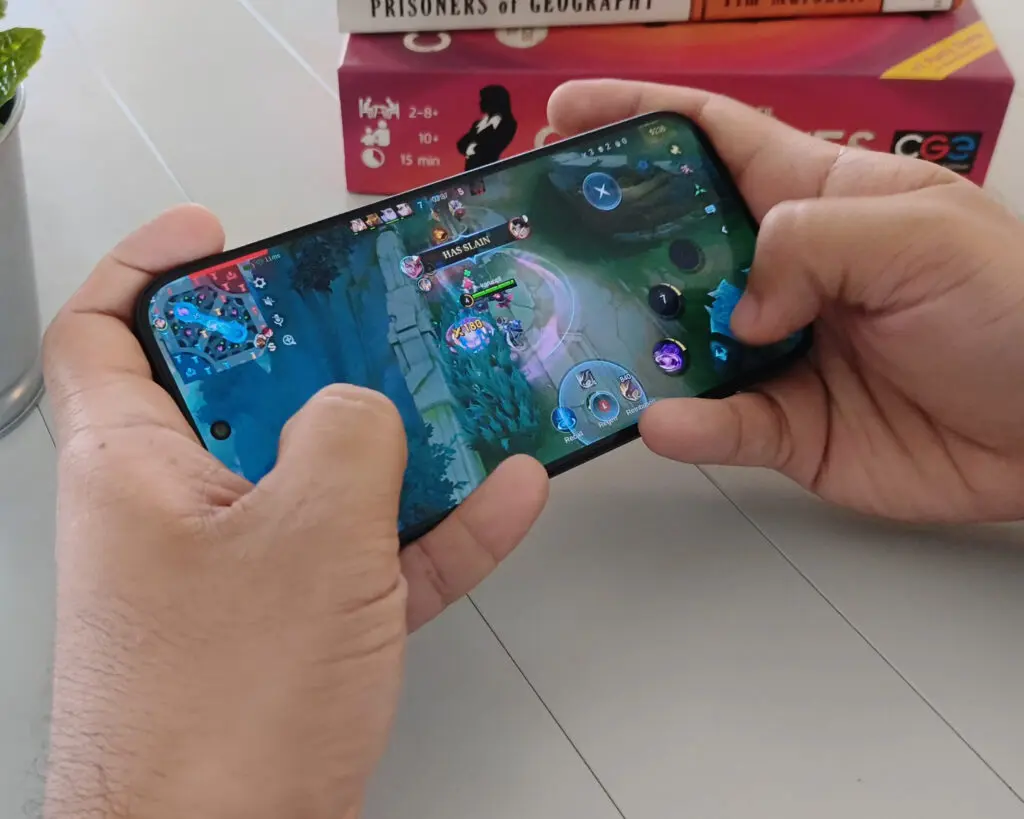
The built-in esports mode is one of the most noticeable additions. Once activated, it blocks notifications, limits background activity, and reallocates system resources to the game. This helps reduce sudden frame drops caused by apps running in the background. It also creates a more focused environment, which matters during competitive sessions.
There are also AI-assisted features layered into the system. Smart Trigger suggestions, gameplay recognition, and system-level optimizations attempt to adjust performance depending on what you are doing. In practice, these features are subtle. They do not drastically change how the phone behaves, but they help maintain consistency, especially when switching between apps or during extended play.
Outside gaming, XOS 16 still carries its usual traits. It is feature-rich, sometimes to the point of feeling heavy. There are customization options, floating windows, and system tools that add flexibility, but they may not appeal to users who prefer a cleaner interface.
Hardware
Moving to hardware, the GT 50 Pro is powered by the MediaTek Dimensity 8400 Ultimate paired with 12GB of RAM. On paper, this already places it in a strong position for gaming and multitasking, but the real story is how it performs under load.
Here is a breakdown of the benchmark results gathered during testing:
| Benchmark | Result |
|---|---|
| AnTuTu v11 | 1,808,355 |
| CPU (AnTuTu) | 432,854 |
| GPU (AnTuTu) | 625,304 |
| Memory (AnTuTu) | 373,963 |
| UX (AnTuTu) | 376,234 |
| Geekbench 6 (Single-Core) | 1,156 |
| Geekbench 6 (Multi-Core) | 5,660 |
| Geekbench 6 GPU (OpenCL) | 11,833 |
| Geekbench 6 GPU (Vulkan) | 11,823 |
| 3DMark Wild Life Extreme | 3,964 (23.74 FPS avg) |
| 3DMark Wild Life | Maxed Out |
| 3DMark Steel Nomad Light | 1,430 (10.60 FPS avg) |
| Storage Test (UFS 4.x) | 236,759 |
| Storage 2.0 Score | 90,788 |
| Geekbench AI (Peak) | 2125 / 2455 / 3161 |
These numbers show strong CPU and GPU output for its class, supported by fast storage speeds that improve loading times and app responsiveness. The GPU scores, in particular, highlight its ability to handle demanding games at higher settings.
Gaming and Cooling
Thermal management through the Hydropump liquid cooling architecture, visible at the back, is also partly handled through software. The system allows different cooling modes, including more aggressive settings that prioritize rapid cooling and a smart mode that intelligently adjusts the cooling depending on what you’re doing, giving users some level of control depending on their usage.
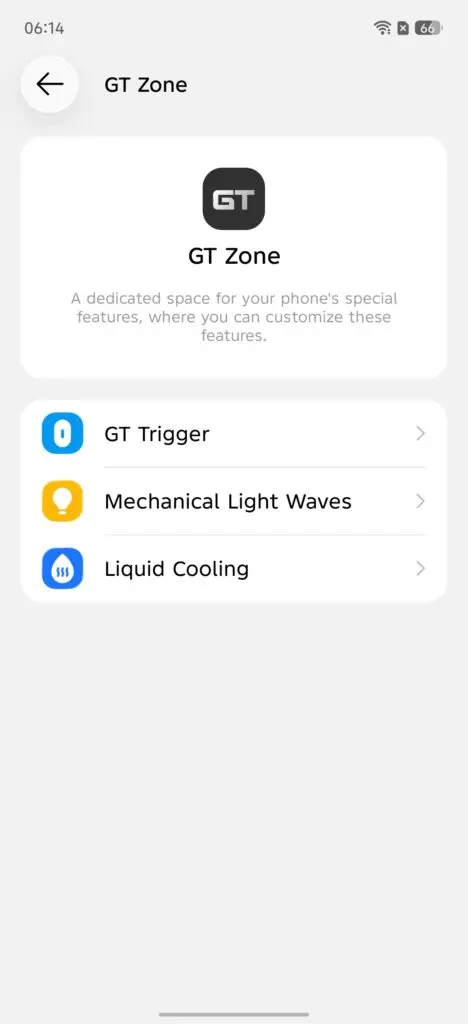
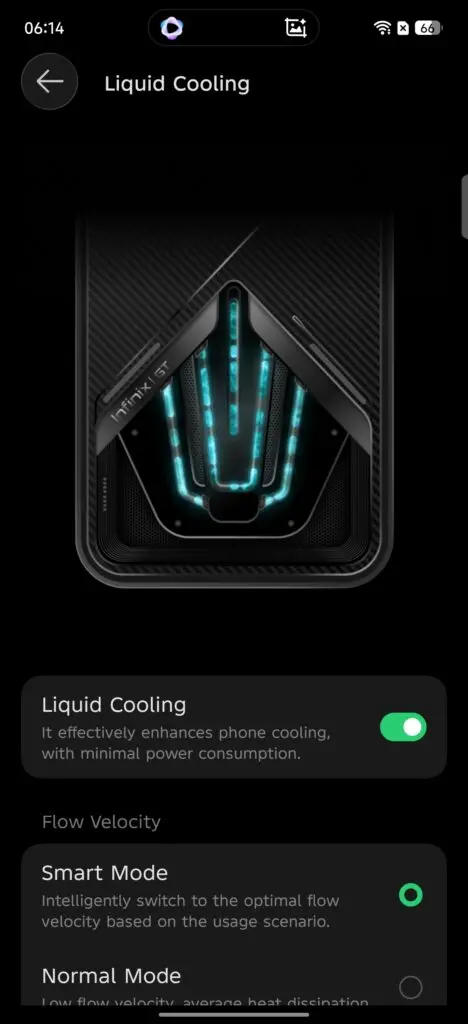
What matters more is how stable these numbers translate into real use. During extended tests, temperatures remained controlled, and frame rates stayed consistent instead of dropping sharply. This is where the liquid cooling system plays a key role, allowing the device to maintain performance over longer sessions rather than peaking early and slowing down.
For example, temperatures during multiple rounds of Mobile Legends: Bang Bang did not exceed 39 degrees while the rapid mode was on. It also helps in making the phone cool down faster after gaming.
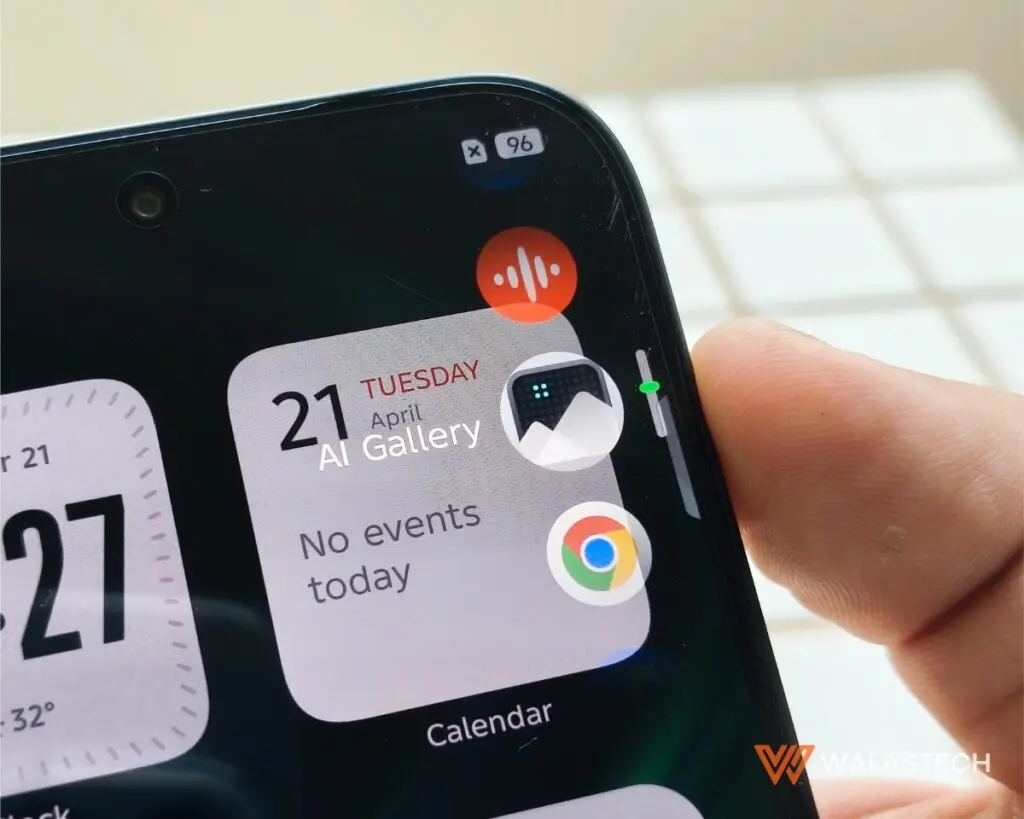
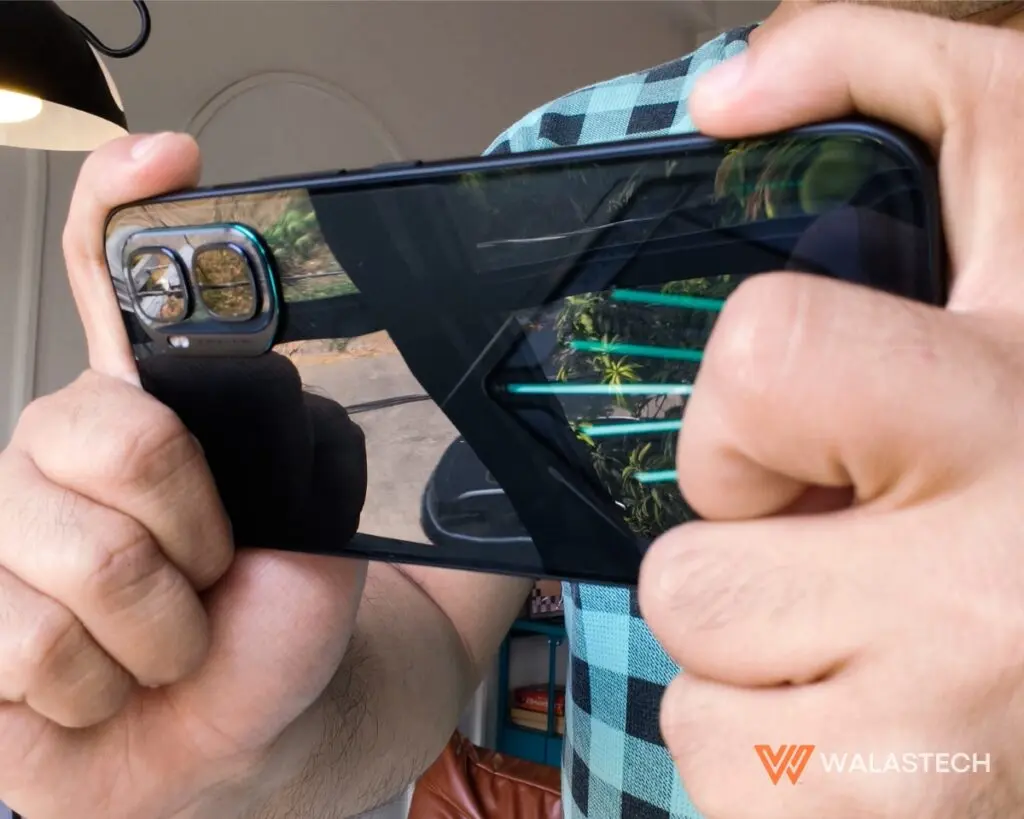
The GT Trigger system adds another layer to that performance. These pressure-sensitive shoulder buttons provide physical input options that reduce reliance on the touchscreen. They can be mapped to different actions and respond to varying pressure levels, giving players faster and more precise control. In fast-paced games, this can directly affect reaction time and accuracy.
When not in gaming, the triggers can act as shortut buttons to launch apps or even be a camera zoom slider and shutter.
Connectivity
Connectivity on the Infinix GT 50 Pro is built with gaming stability in mind, not just raw speed. It supports the expected set of modern standards including 5G, dual-band Wi-Fi, Bluetooth, NFC, and USB-C, which already covers everyday needs like fast data, wireless accessories, and contactless payments. On paper, this looks standard, but the real focus is on maintaining a stable connection during actual use.
The standout addition is the dedicated N1 network chip. Unlike typical setups that rely solely on the main chipset for connectivity tasks, this separate chip is designed to manage signal strength and network stability more efficiently. Its role is to reduce fluctuations in connection quality, especially in environments where signal strength is inconsistent. This becomes more noticeable in online gaming, where even small drops in stability can lead to lag spikes or delayed inputs.
The N1 chip helps maintain a more consistent connection when moving between areas with varying signal strength, such as indoors to outdoors or across different rooms. It also works to improve latency stability rather than just peak speeds. This means gameplay feels more consistent, even if your connection is not at its fastest. We downloaded the huge AnTuTu 3D Benchmark APK with ease, in a matter of mere seconds.
The device also supports intelligent network switching. It can shift between Wi-Fi and mobile data more smoothly when one becomes unstable, helping prevent sudden disconnections. This is particularly useful for users who game or stream while moving around.
Bluetooth performance is stable for wireless audio and accessories, which is important for gaming setups that rely on wireless earbuds or controllers. NFC support adds convenience for payments and quick pairing.
Battery and Charging
The Infinix GT 50 Pro includes either a 6500mAh or 6150mAh battery, which is larger than most devices in its category. This translates to long usage times, even with heavy gaming.
In controlled testing, the phone lasted 11 hours and 20 minutes in the PCMark Battery Test with Liquid Cooling set to Rapid Mode. With liquid cooling turned off, it extended to 12 hours and 20 minutes. This shows that the cooling system does have an impact on power consumption, trading a bit of endurance for better thermal performance during heavy use.
In real-world use, the device can handle extended gaming sessions along with daily tasks without needing frequent charging. The large battery helps balance the demands of the high refresh rate display and performance hardware.
Charging performance is decent but not the fastest in its class. By default, you’re using a Smart Charging mode that touts to intelligently adjust the speed depending on your usage, but you can easily toggle and switch to a slower, low-temperature charging mode, or a faster but slightly warmer Hyper Mode that uses the full 45-watt charging power. You can’t use these modes when you use a third party charger, which signal that the charging system is proprietary.
Using the provided 45W charger and cable, the phone takes almost 1.5 hours to go from 20% to 100% under Hyper Charging mode. This is acceptable given the large battery capacity, though some competitors offer quicker top-ups.
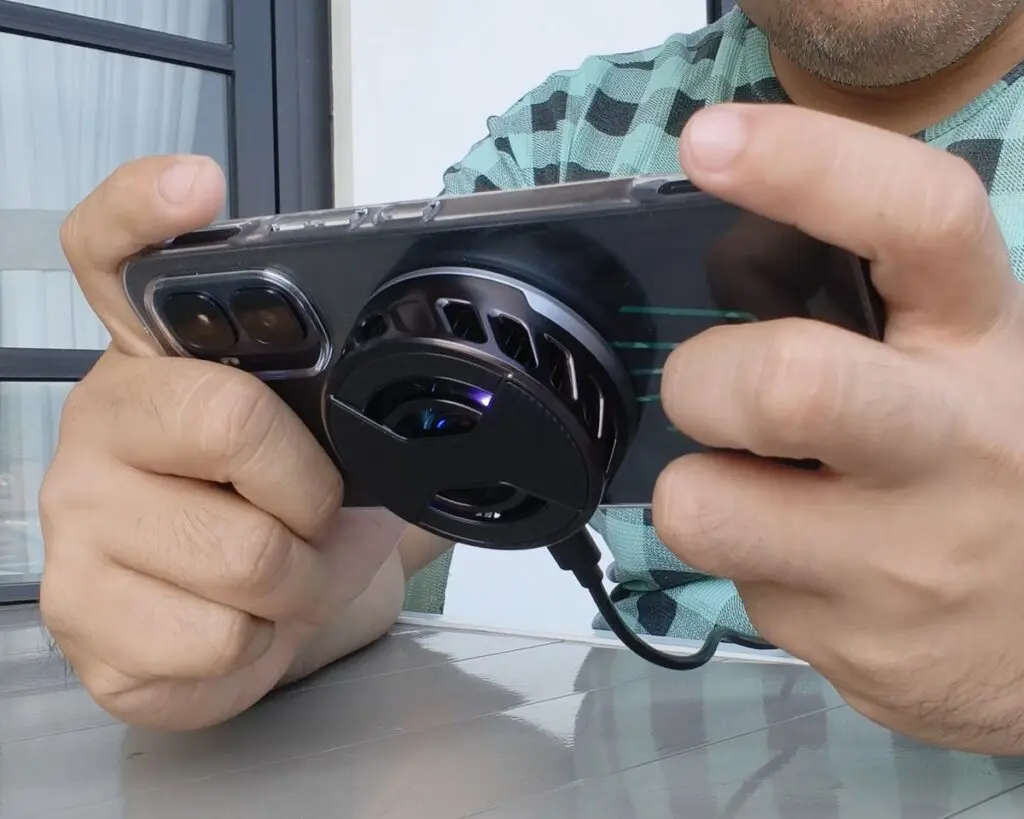
Charging options also include 30W wireless charging, which is still uncommon in this segment and adds flexibility. Wireless bypass charging, using the MagCool 2.0 accessory, remains one of its key features for gaming. It allows the phone to draw power directly from the charger while gaming, reducing heat buildup and helping preserve battery health during long sessions.
The Rundown
The Infinix GT 50 Pro is for mobile gamers who care about consistency more than peak numbers. If you play long sessions, especially competitive titles, this device really makes sense. The cooling system, stable frame rates, and GT Trigger controls all work toward keeping performance steady instead of dropping off after a few matches. It is also for users who want flexibility while gaming, with features like bypass charging, wireless charging, and a large battery that can keep up without constant breaks.
It also fits users who value a high refresh display and strong audio for media consumption. Even outside gaming, the screen and speakers make it a good device for streaming and everyday use.
However, it is less suited for users who prioritize camera performance or want a cleaner, more minimal design. The camera system is surprisingly capable, but not the main focus, and the overall look of the phone leans heavily into gaming. The software experience, despite being similar to that of the previously released Infinix Note 60 Ultra, may also feel heavy for those who prefer a simpler interface with the added gaming-centric features in tow.
In short, this is for users who want a phone that performs best under pressure, not just in short bursts, and are willing to accept a few trade-offs to get that experience.
(UPDATED MAY 28 2026) The Infinix GT 50 Pro is officially launching in the Philippines on May 30 with these prices: PHP 25,999 for the 256GB variant, and PHP 29,999 for the 512GB variant (you can now add the items to your cart on Shopee, just click the links on the prices). Preorders are now underway at Infinix brand stores and authorized dealers nationwide with over PHP 11,000 worth of freebies, including a one-time Liquid Cooling replacement, among other merchandise. Online launch offers will be offered, so stay tuned to our website for updates.
Get the latest from WALASTECH directly on your Google feed.
Add as a preferred source on Google