

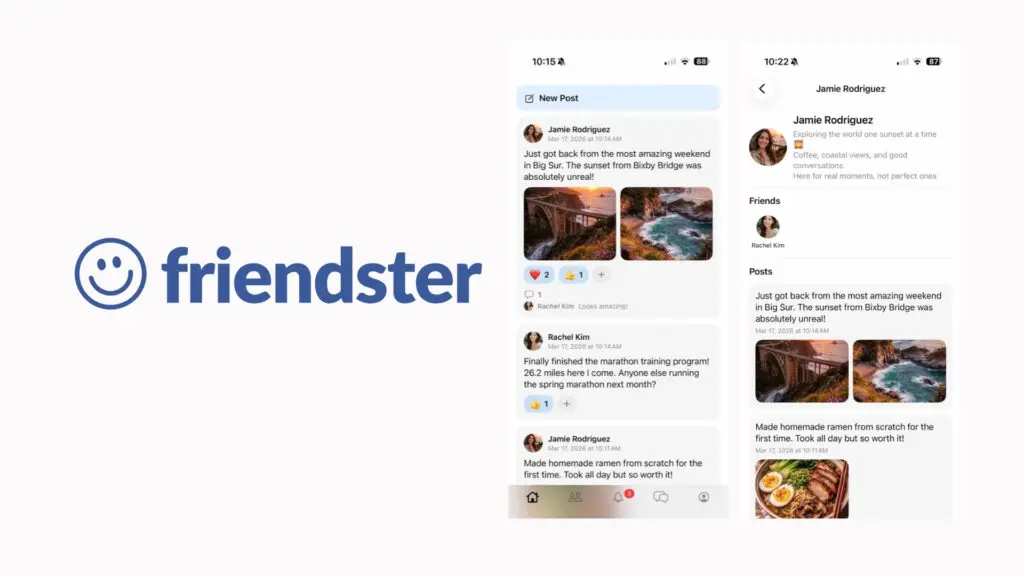
Friendster is back online, but it is no longer trying to compete as a traditional social media platform. The relaunched Friendster now positions itself as a simplified, private network focused on real-life connections rather than public feeds and viral content. At the moment, the service is only available on iPhones, with no confirmed timeline yet for Android or wider platform support.
Why it matters: Friendster was once a major part of early internet culture in the Philippines and across Asia. Its return with a privacy-first approach reflects a growing shift in how users view social media today, especially around data ownership and smaller, more meaningful online interactions. However, limiting access to iPhones at launch could affect how quickly it regains traction, especially in markets where Android dominates.
The homepage introduces a clear message: “Social networking, without the nonsense.” Instead of ads, algorithms, and large follower networks, the platform emphasizes direct connections between people who already know each other. It also states that it does not sell user data, addressing a long-standing concern with modern social platforms.
According to the site, the new Friendster is designed around real-life friendships. Users are encouraged to add friends in person using phone-to-phone connections, rather than sending requests online to strangers or building a follower count. The platform highlights that feeds are meant only for actual friends, not for public audiences or algorithm-driven discovery.
It also promotes a more controlled environment for sharing. Posts and messages stay within a user’s private network, with no indication of public virality features. The absence of ads, spam, and algorithmic sorting suggests a chronological or simplified feed experience, although full technical details have not been disclosed.
This approach marks a significant shift from Friendster’s previous approach, which focused on customizable profiles, testimonials, and broader social discovery, and then became a platform for emerging Web3 trends. The new version removes those elements entirely in favor of a more closed and intentional network structure.
iPhone users can try out Friendster first, check it out here. With Friendster returning as a private, real-life social network and currently limited to iPhones, will users adopt this more controlled approach, or will accessibility hold it back?
Get the latest from WALASTECH directly on your Google feed.
Add as a preferred source on Google